
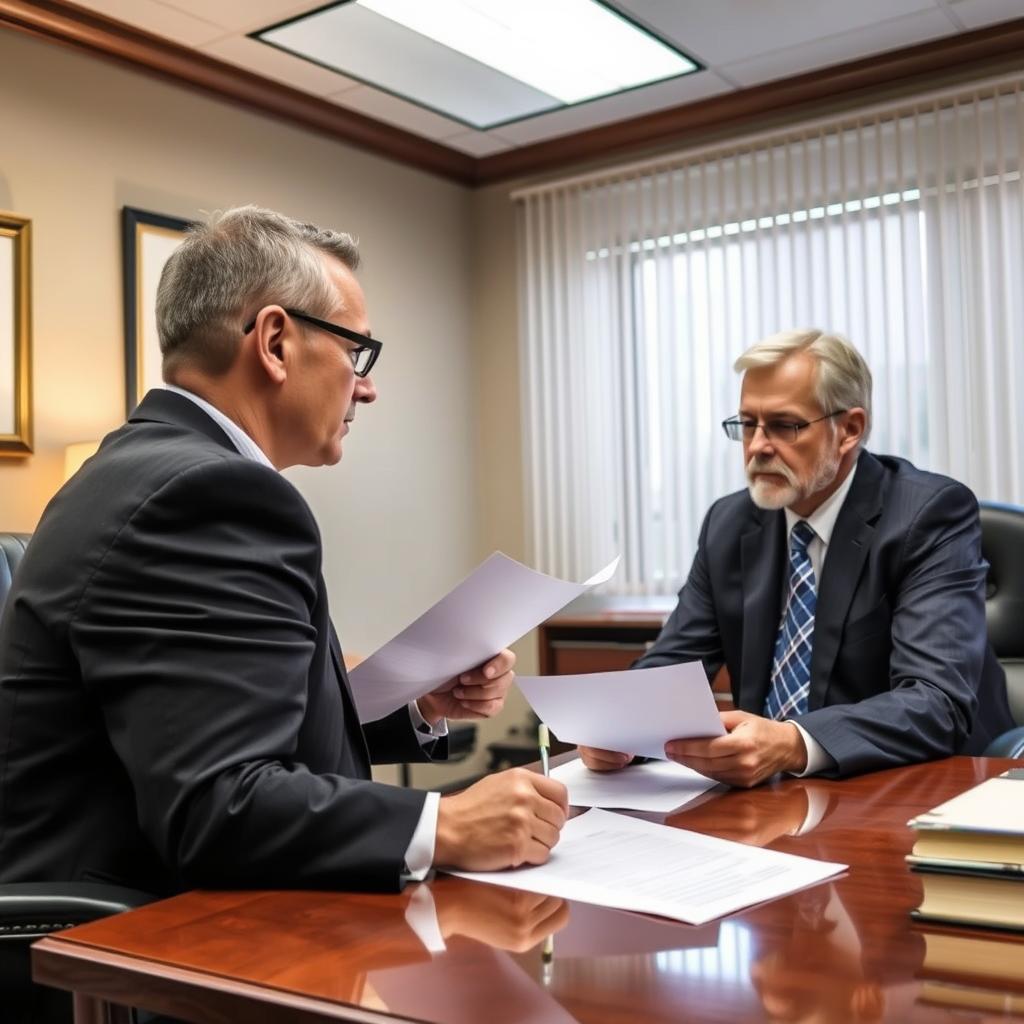
Adultery Divorce Lawyer Dinwiddie County, VA
Adultery divorce in Dinwiddie County, Virginia, proceeds under fault-based divorce law, which means a spouse alleging the other’s extramarital conduct may file for a divorce from the bond of matrimony without the usual separation waiting period. Virginia Code § 20‑91(1) recognizes adultery as a ground for divorce that, if proven, can accelerate the path to dissolution and may affect the division of marital property and spousal support. For residents in Dinwiddie, McKenney, and the surrounding communities in the Eleventh Judicial District, these cases are heard before the Dinwiddie County Circuit Court, located at the Dinwiddie Courthouse, Dinwiddie, VA 23841. Mr. Sris, Owner and Founder of Law Offices Of SRIS, P.C., has concentrated on Virginia family law since 1997 and appears regularly in Dinwiddie County Circuit Court on behalf of individuals pursuing or defending an adultery-based divorce. To discuss whether an adultery divorce is appropriate for your circumstances, reach Law Offices Of SRIS, P.C. at (888) 437‑7747. Law Offices Of SRIS, P.C. – Advocacy Without Borders.
What Adultery Divorce Means in Dinwiddie County
Virginia’s divorce statute provides both no‑fault and fault grounds. Adultery is one of the fault grounds set out in Va. Code § 20‑91(1) and is unique in that it imposes no mandatory separation period before the divorce complaint may be filed. Unlike a no‑fault divorce — which requires either six months of separation with a signed agreement and no minor children, or one year of separation — an adultery‑based divorce allows the filing spouse to initiate the action immediately once the statutory residency requirement of six months’ domicile in Virginia is satisfied. The case is filed as a Complaint in the Dinwiddie County Circuit Court, the only court in the county with jurisdiction to grant a divorce.
Dinwiddie County sits south of Petersburg and is served by major corridors including I‑85, Route 1, and Route 460. The Dinwiddie County Circuit Court convenes at the Dinwiddie Courthouse and handles all aspects of a divorce case: granting the divorce itself, dividing marital property and debts under Virginia’s equitable distribution framework, and determining spousal support. Standalone custody, visitation, and child support matters may be addressed in the Dinwiddie County Juvenile and Domestic Relations District Court. Law Offices Of SRIS, P.C. represents clients from across the county — Dinwiddie, McKenney, and nearby localities — through its Richmond location at 7400 Beaufont Springs Drive, Suite 300, Room 395, Richmond, VA 23225. Mr. Sris and his Of Counsel are familiar with the local practices of the Dinwiddie County Circuit Court and assist clients in preparing the complaint and presenting the evidence necessary to prove or defend against an allegation of adultery.
How Mr. Sris and His Of Counsel Handle Adultery Divorce Cases
Adultery divorces require careful attention to evidence because Virginia courts demand clear and convincing proof of the extramarital conduct. Mr. Sris and his Of Counsel evaluate the circumstances, identify potential sources of admissible evidence, and work to build a case strategy that aligns with the client’s goals — whether that means pursuing a fault‑based divorce to avoid the separation period or defending against an accusation that could impact property division and support. The process begins with a consultation in which the client describes the factual background and the firm discusses the legal framework that governs adultery claims in Virginia.
Once engaged, the firm takes steps to prepare the case for filing in the Dinwiddie County Circuit Court. This includes drafting the Complaint, managing service of process, and, when appropriate, seeking temporary relief through pendente lite motions under Va. Code § 20‑103. Because adultery can affect the equitable distribution analysis under Va. Code § 20‑107.3 — specifically, a court may consider marital fault that has an economic impact — the team works to develop a record that protects the client’s interests in property, retirement assets, and support obligations. Throughout the proceeding, Mr. Sris and his Of Counsel focus on resolving the matter in a manner that avoids unnecessary delay while preserving the client’s rights under Virginia law.
About Mr. Sris and His Of Counsel Team
Mr. Sris, Owner and Founder of Law Offices Of SRIS, P.C., has concentrated his practice on family law matters in Virginia since 1997. A former prosecutor, he brings a measured approach to fault‑based divorce cases, including those grounded in allegations of adultery. Mr. Sris has testified before the Virginia House Courts of Justice Committee in support of 2019 HB 635 (chief patron Del. David Bulova). He is admitted to practice in Virginia, Maryland, the District of Columbia, New Jersey, and New York, and he leads a team of Of Counsel attorneys who contribute their own knowledge across practice areas. Together, Mr. Sris and his Of Counsel bring over 120 years of combined legal experience, with 4,739+ documented firm-wide results. Results may vary.
The firm has documented favorable results for clients in Dinwiddie County across all practice areas. In this locality, Law Offices Of SRIS, P.C. has accumulated 30 total documented case results, all reflecting outcomes favorable to clients. Each matter is handled by Mr. Sris and his Of Counsel, who are engaged through Excella and are not firm employees. The team’s familiarity with the Dinwiddie County Circuit Court and its procedures helps clients navigate the demands of an adultery divorce while keeping attention on the practical outcomes that affect their daily lives — child custody arrangements, financial security, and the timely resolution of the marital relationship.
Frequently Asked Questions
What is an adultery divorce in Virginia?
An adultery divorce in Virginia is a fault‑based divorce granted under Va. Code § 20‑91(1) when a spouse proves the other spouse’s extramarital sexual conduct. Unlike a no‑fault divorce, an adultery finding eliminates the required separation period and may influence property division and spousal support. The petitioner must present corroborated evidence; mere suspicion is insufficient. Because of the high evidentiary standard, consulting an experienced family law attorney is essential before filing.
How does adultery affect property division in a Dinwiddie County divorce?
Under Virginia’s equitable distribution statute, Va. Code § 20‑107.3, the court may consider marital fault — including adultery — when that fault has an economic impact on the marital estate. For example, if a spouse spent marital funds on an extramarital relationship, a court could adjust the division of assets to account for that dissipation. The court weighs all eleven statutory factors, so the overall economic picture determines whether adultery changes the distribution.
Do I need a lawyer for an adultery divorce in Dinwiddie County?
While Virginia law does not require a lawyer to file for divorce, handling an adultery‑based claim without legal counsel creates risks given the strict evidentiary requirements and long‑term consequences for property and support. An attorney familiar with Dinwiddie County Circuit Court can evaluate evidence, ensure procedural compliance, and advocate a position that protects your interests. A misstep in presenting the grounds could delay the final decree or diminish your share of marital assets.
How do you prove adultery in court?
Adultery must be proven by clear and convincing evidence, which often combines direct and circumstantial proof. Direct evidence may include testimony or admissions; circumstantial evidence can involve proof of opportunity and disposition — such as hotel records, communications, or financial trails — coupled with a lack of any reasonable explanation. Virginia courts require corroboration of the complaining spouse’s testimony, so gathering independent witnesses or documentation is helpful.
Can I defend against an adultery accusation in a divorce?
Yes, a spouse accused of adultery can defend by challenging the sufficiency of the evidence, asserting procedural defects, or showing that the alleged conduct does not meet the legal definition under Virginia law. Because the burden rests on the accuser, mounting a defense often focuses on demonstrating gaps in proof, inconsistencies in testimony, or the absence of corroboration. An experienced family law attorney can assess the strength of the accusation and develop a strategy accordingly.
How long does an adultery divorce take in Dinwiddie County?
The timeline for an adultery divorce in Dinwiddie County varies based on whether the grounds are contested, the court’s schedule, and the complexity of the financial issues involved. An uncontested case where both parties accept the fault ground can move more quickly than one requiring an evidentiary hearing. Even when adultery is alleged, pendente lite relief for temporary support or custody can provide interim measures while the divorce is pending. Reach Law Offices Of SRIS, P.C. at (888) 437‑7747 to discuss your situation.
Related practice areas: Fairfax County Family Law Lawyer · Prince William County Family Law Lawyer · Falls Church Family Law Lawyer · Manassas Family Law Lawyer · Fairfax City Family Law Lawyer
Attorney advertising. Prior results do not guarantee a similar outcome.
Case results depend on a variety of factors unique to each case.