
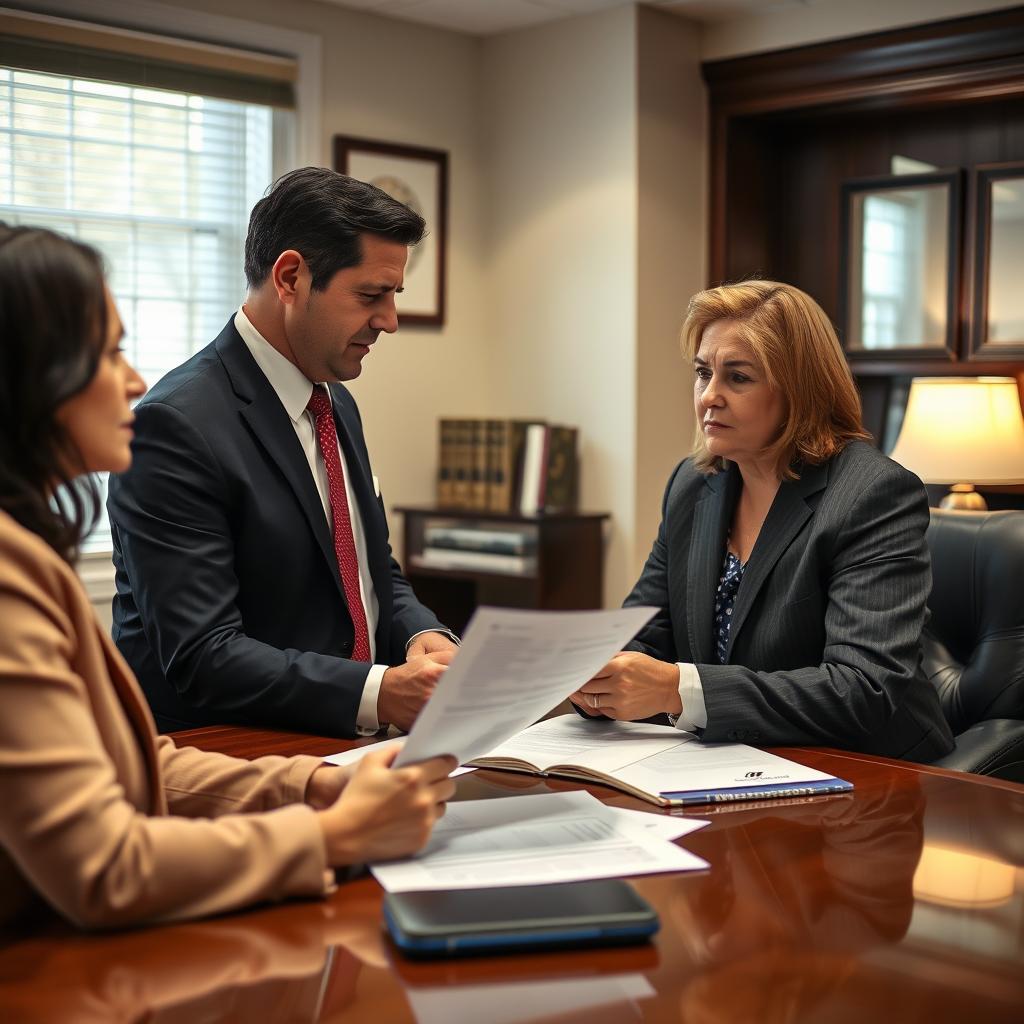
Cruelty Divorce Lawyer Prince George County, VA
You have been living with cruelty in your marriage, and you know you need to get out. The situation has become unbearable — constant verbal abuse, threats, even physical harm. You want to file for divorce, but you are not sure how to prove cruelty in a Virginia court. You need a lawyer who understands what you are facing and who can help you present your case effectively in Prince George County. Law Offices Of SRIS, P.C. Concentrates its practice on family law matters, including fault‑based divorces grounded on cruelty. Reach our location at (888) 437-7747. Law Offices Of SRIS, P.C. – Advocacy Without Borders.
How We Approach a Cruelty Divorce in Prince George County
Mr. Sris and his Of Counsel team concentrate their family law practice on helping clients navigate the divorce process with clarity. A cruelty divorce requires the spouse filing to prove that the other spouse’s conduct caused a reasonable apprehension of bodily hurt, making cohabitation unsafe or intolerable. The team gathers the documentation, presents the evidence, and advocates for your interests while you focus on rebuilding your life. Instead of treating your case as one of many, Mr. Sris and his Of Counsel work to develop a strategy that fits the facts of your marriage and the standards applied in the Prince George County Circuit Court.
Because cruelty is a fault ground under Virginia law, the divorce may be granted without a separation period. That means you can move forward sooner than in a no‑fault case. Mr. Sris and his Of Counsel team can explain how this ground affects property division, spousal support, and custody, so you understand the bigger picture before making decisions.
What to Expect When You Pursue a Cruelty Divorce in Prince George County
Your case will be heard in the Prince George County Circuit Court at 6601 Courts Drive, Prince George, VA 23875. The Circuit Court has exclusive original jurisdiction over divorce actions, while the Juvenile and Domestic Relations District Court may handle associated custody, support, or protective‑order matters. Mr. Sris and his Of Counsel appear in both courts, so your entire matter can be managed consistently.
After you file your Complaint (Virginia no longer uses “Complaint”), the other spouse must be served. Discovery allows both sides to gather information. If fault is contested, a trial may be necessary. Throughout the process, Mr. Sris and his Of Counsel keep you informed and address your questions about timelines and likely outcomes without making promises the court alone controls. Each case moves on its own timeline depending on court availability, discovery complexity, and whether the parties reach a settlement.
Why Fault Grounds Matter in a Virginia Divorce
Fault grounds like cruelty can influence equitable distribution, spousal support, and even custody determinations. Virginia courts consider the circumstances and factors that contributed to the dissolution of the marriage when deciding how to divide marital property and whether to award support. Because the stakes are high, presenting a clear, well‑documented case of cruelty can be critical. Mr. Sris and his Of Counsel team help you understand what evidence is persuasive and how to protect your interests.
It is important to know that a cruelty‑based divorce is not about punishing the other spouse. The legal focus is on establishing that the marital relationship cannot continue safely. Mr. Sris and his Of Counsel approach your matter with professionalism, avoiding unnecessary conflict while safeguarding your rights. Results may vary.
About Mr. Sris and His Of Counsel Team
Mr. Sris, Owner and Founder of Law Offices Of SRIS, P.C., founded the firm in 1997. A former prosecutor, he draws on his background to analyze cases from multiple angles. Mr. Sris testified before the Virginia House Courts of Justice Committee in support of 2019 HB 635 (chief patron Del. David Bulova). His work in the legislature reflects his thorough understanding of Virginia’s equitable distribution statute, Va. Code § 20-107.3, and how statutory language affects real families.
Mr. Sris and his Of Counsel bring over 120 years of combined legal experience with 4,739+ documented firm-wide results. Results may vary. The team includes Of Counsel attorneys with backgrounds in criminal law, CPS matters, and complex litigation — skills that can be valuable in a contested cruelty divorce where allegations may overlap with protective‑order or criminal issues. Our Richmond Location serves clients in Prince George County and the surrounding Hopewell area.
Frequently Asked Questions
What is a cruelty divorce in Virginia?
A cruelty divorce is a fault‑based divorce granted when one spouse can prove the other’s conduct caused a reasonable apprehension of bodily harm, making continued cohabitation unsafe. Grounds are set out in Va. Code § 20-91. Unlike no‑fault divorce, cruelty does not require a separation period. The court requires evidence showing that the behavior was more than ordinary marital conflict. An experienced family law attorney can help you evaluate whether your circumstances fit the statutory standard.
How do I prove cruelty in a Prince George County divorce case?
You prove cruelty by presenting credible evidence — such as testimony, records of threats, medical documentation, or other corroboration — that demonstrates a pattern of conduct causing reasonable fear of bodily hurt. The court determines credibility based on the specific facts. Mr. Sris and his Of Counsel can help you identify and organize the evidence to present a clear case. Our Richmond Location is available to discuss your matter at (888) 437-7747.
Do I need to leave the home before filing for a cruelty divorce?
You are not legally required to leave the marital home before filing, but your safety is paramount. If remaining in the home poses a risk, you may consider obtaining a protective order from the Prince George County Juvenile and Domestic Relations District Court while the divorce proceeds. Mr. Sris and his Of Counsel can guide you through both the divorce and any needed protective measures.
Can cruelty affect property division in a Virginia divorce?
Yes, a judicial finding of cruelty can influence equitable distribution. Under Va. Code § 20-107.3, the court considers the “circumstances and factors that contributed to the dissolution of the marriage.” Fault may result in a distribution that favors the non‑offending spouse. Each case is reviewed on its own merits, and the court applies the eleven statutory factors to reach a fair outcome.
What happens if my spouse denies the cruelty allegations?
If the allegations are denied, the court may require a trial where both sides present evidence. The judge will evaluate the credibility of the testimony and documentation. Mr. Sris and his Of Counsel prepare each case thoroughly, anticipating defenses and working to present a persuasive record. While a contested divorce may extend the timeline, the goal remains achieving a just resolution.
How long does a cruelty divorce take in Prince George County?
The timeline varies depending on whether the divorce is contested, the court’s schedule, and the complexity of the evidence. Because fault grounds do not require a separation period, a cruelty divorce can be finalized sooner than a no‑fault case if it is uncontested. However, if a trial is needed, the case will take longer. Mr. Sris and his Of Counsel can give you a general overview of what to expect after reviewing your situation.
Can I get spousal support based on cruelty?
A court may award spousal support based on the statutory factors in Va. Code § 20-107.1, which include consideration of the circumstances that led to the divorce. Fault like cruelty can tip the balance in favor of a support award or influence its duration. Mr. Sris and his Of Counsel can assess whether the facts of your case support a request for ongoing or temporary support.
Will a cruelty divorce impact child custody?
Cruelty may have an indirect effect on custody if the behavior endangered or could endanger the child. The court decides custody based on the best interests of the child under Va. Code § 20-124.3. A history of domestic abuse is one of the ten factors the court must consider. Mr. Sris and his Of Counsel handle custody matters alongside the divorce to ensure all issues are addressed consistently.
What should I bring to my first meeting with a family law attorney?
Bring any documentation that supports your description of the cruelty, such as threatening messages, photographs of injuries, police reports, or witness contact information. Also bring financial records and a list of questions. Gathering this material in advance helps your attorney assess the case efficiently. To schedule a consultation, call (888) 437-7747.
Why choose a lawyer who concentrates in Virginia family law for a Prince George County cruelty divorce?
A lawyer who regularly practices in Prince George County courts is familiar with local judges and procedures, which can help your case move smoothly. Mr. Sris and his Of Counsel concentrate in family law across Virginia and appear at the Prince George County Circuit Court. Their familiarity with the local court culture and Virginia’s equitable distribution principles provides a solid foundation for handling cruelty divorces.
Ready to Move Forward?
If you are considering a cruelty divorce in Prince George County, reach our Richmond Location. Call (888) 437-7747 or use our website to schedule a consultation. Mr. Sris and his Of Counsel are prepared to listen to your story and explore your options.
Law Offices Of SRIS, P.C.
Richmond Location
7400 Beaufont Springs Drive, Suite 300, Room 395
Richmond, VA 23225
(888) 437-7747 · (804) 201-9009
By appointment only.
Explore related resources: Fairfax County Family Law · Prince William County Family Law · Comprehensive divorce analysis at srislawyer.com
Attorney advertising. Prior results do not guarantee a similar outcome. Results may vary.
Case results depend on a variety of factors unique to each case.