
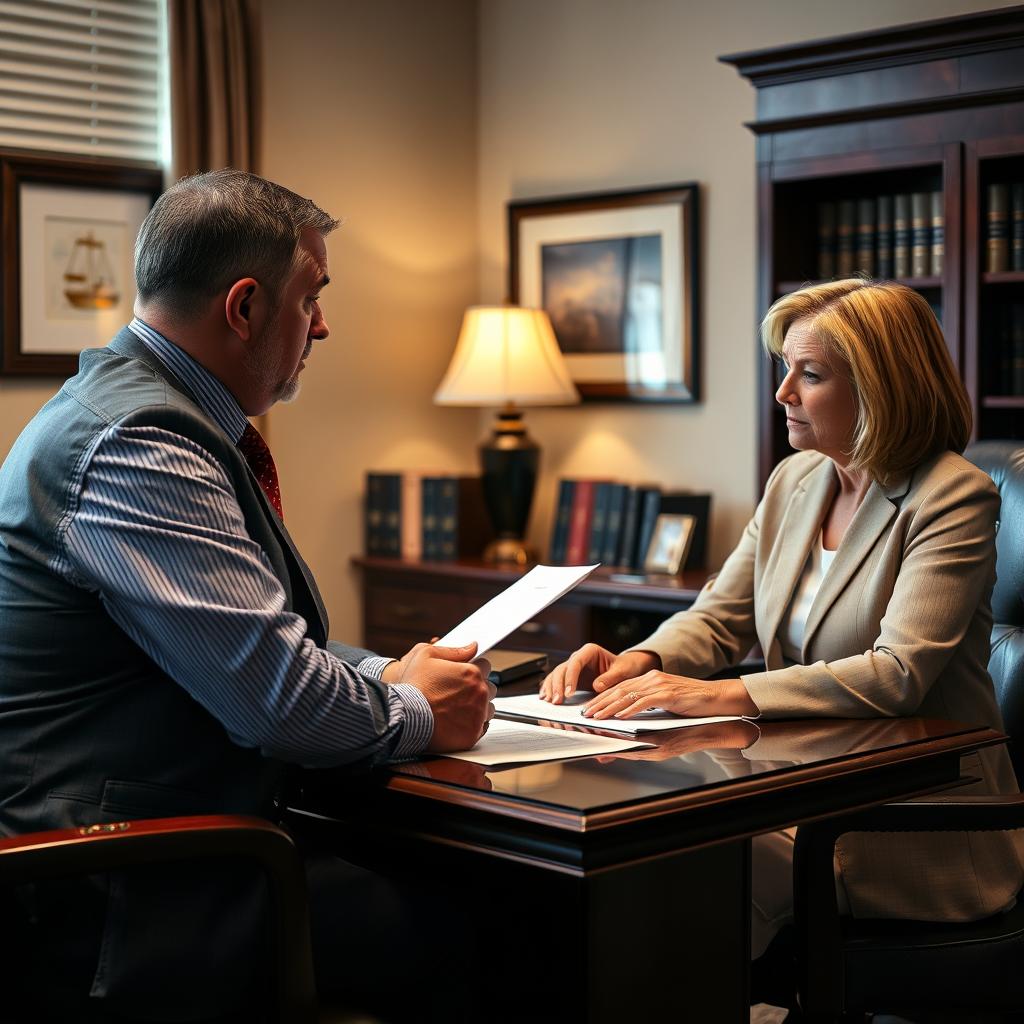
Postnup Lawyer King William County, VA
You and your spouse have built a life together in King William County. Perhaps you own a farm outside West Point, a small business in Aylett, or retirement accounts that have grown over the years. Now you want to clarify financial rights and responsibilities without ending the marriage. A postnuptial agreement can provide that clarity. At Law Offices Of SRIS, P.C., Mr. Sris and the firm’s Of Counsel attorneys assist clients in drafting enforceable postnuptial agreements that protect individual interests under Virginia law. Call (888) 437-7747 to request a consultation. Law Offices Of SRIS, P.C. – Advocacy Without Borders.
What a Postnuptial Agreement Means in King William County, Virginia
A postnuptial agreement is a contract between two spouses, signed after the wedding, that determines how property, debts, and spousal support will be handled if the marriage ends. In King William County, these agreements are governed by the Virginia Premarital Agreement Act (Va. Code § 20‑147 et seq.), which applies to both prenuptial and postnuptial agreements. The Circuit Court of King William County, located at 351 Courthouse Lane in King William, has jurisdiction over all divorce, equitable distribution, and related matters. When a valid postnuptial agreement exists, the court generally honors the agreement’s terms instead of applying the statutory equitable‑distribution factors found in Va. Code § 20‑107.3.
For residents of King William, West Point, and the surrounding rural areas, a postnuptial agreement can be especially useful when one spouse has inherited family land, runs a multi‑generational business, or holds separate retirement assets. Because Virginia is an equitable‑distribution state—not a community‑property state—the court divides marital property fairly but not necessarily equally. A properly executed postnuptial agreement allows the couple to decide for themselves what fair means, rather than leaving the decision to a judge.
How Mr. Sris and the Firm’s Of Counsel Attorneys Handle Postnuptial Agreements
Mr. Sris and the firm’s Of Counsel team approach each postnuptial agreement with a focus on thorough disclosure, clarity, and enforceability. The process typically begins with a confidential consultation to understand the couple’s goals, identify each spouse’s separate and marital property, and discuss any concerns about future financial arrangements. The firm’s attorneys then prepare a draft agreement that reflects the couple’s intentions while complying with Virginia statutory requirements.
During the negotiation and revision stage, the firm helps each party understand the legal effect of every provision. Virginia courts will enforce a postnuptial agreement only if it is entered into voluntarily, with full financial disclosure, and without unconscionability. The firm’s attorneys work to ensure the final document meets these standards. Because the firm’s Richmond location serves clients at the King William County courts, any related proceedings—such as a divorce or a petition to enforce the agreement—can be handled by attorneys who are familiar with the local courthouse and its procedures.
Consequences of Not Having a Postnuptial Agreement
Without a postnuptial agreement, Virginia’s default equitable‑distribution rules govern the division of marital property upon divorce. The court considers eleven statutory factors, including each spouse’s monetary and non‑monetary contributions, the length of the marriage, and the circumstances that led to the separation. This process can be unpredictable, time‑consuming, and expensive. A postnuptial agreement replaces that uncertainty with the couple’s own agreed‑upon terms, often simplifying any future legal proceedings and reducing conflict. It can also preserve family assets, protect a business, or specify spousal support arrangements that a court might not order on its own.
About Mr. Sris and the Firm’s Of Counsel Attorneys
Mr. Sris, Owner and Founder of Law Offices Of SRIS, P.C., has practiced family law since founding the firm in 1997. He is a former prosecutor whose experience in Virginia courtrooms informs his approach to negotiation and litigation. Mr. Sris testified before the Virginia House Courts of Justice Committee in support of 2019 HB 635 (chief patron Del. David Bulova), demonstrating his engagement with the family‑law legislative process. The firm’s Of Counsel attorneys bring additional family law, criminal law, and litigation experience to the practice, ensuring that clients who need a postnuptial agreement in King William County have access to knowledgeable counsel. The firm’s Richmond location serves clients throughout the Ninth Judicial District, including King William, West Point, and Aylett.
Frequently Asked Questions
What is a postnuptial agreement, and how does it work in Virginia?
A postnuptial agreement is a written contract signed by two spouses after marriage that sets out how their assets, debts, and spousal support will be handled if they divorce or separate. In Virginia, such agreements are governed by the Premarital Agreement Act (Va. Code § 20‑147 et seq.) and can address property classification, division, and support obligations. For the agreement to be enforceable, both spouses must provide complete financial disclosure, enter into it voluntarily, and the terms must not be unconscionable. When properly drafted, a postnuptial agreement overrides the default equitable‑distribution rules under Va. Code § 20‑107.3.
Are postnuptial agreements enforceable in King William County?
Yes, postnuptial agreements are enforceable in King William County, provided they meet Virginia’s statutory requirements. The King William County Circuit Court will enforce an agreement that was executed voluntarily, with full disclosure, and contains terms that are fair and reasonable at the time of enforcement. Challenges to enforceability most often arise when one spouse claims they did not understand what they were signing or that the agreement was signed under duress. Working with an experienced family law attorney helps ensure the agreement will withstand court scrutiny.
Do I need a lawyer to create a postnuptial agreement?
Virginia law does not require you to hire a lawyer to draft a postnuptial agreement, but legal representation is strongly recommended to ensure the document is enforceable. A lawyer can confirm that all required disclosures are made, that each spouse’s interests are protected, and that the agreement uses precise language that a Virginia court will interpret consistently. Without the guidance of an attorney, a postnuptial agreement may contain unintended loopholes or fail to comply with Virginia legal standards, potentially leaving it unenforceable.
How does a postnuptial agreement differ from a prenuptial agreement?
The primary difference is timing: a prenuptial agreement is signed before marriage, while a postnuptial agreement is signed after the wedding. Both are governed by the same Virginia statute and can address the same issues—property division, spousal support, and identification of separate versus marital property. However, courts may scrutinize postnuptial agreements more closely because the spouses already owe each other a fiduciary duty once married, and the agreement must not result from coercion or imbalance of bargaining power.
Can a postnuptial agreement address child custody or support in Virginia?
No, a postnuptial agreement cannot determine child custody, visitation, or child support in advance. Virginia courts always retain the authority to decide what is in the best interests of the child under Va. Code § 20‑124.3 and to calculate child support according to the statutory guidelines. Any provision in a postnuptial agreement that attempts to limit or predetermine custody or support is unenforceable. The agreement may, however, address spousal support and property division, which can indirectly affect the financial framework for parenting arrangements.
What should I bring to a consultation about a postnuptial agreement?
Come prepared with a general inventory of your assets and debts, including real estate, bank accounts, retirement funds, business interests, and any inheritance or gift property. Also bring information about each spouse’s income and any existing estate‑planning documents. You do not need to have a complete list of every account number—an overview is enough to start the conversation. The firm’s attorneys will ask questions to clarify your goals and explain how Virginia law applies to your situation.
Related family law pages: Fairfax County family law lawyer · Prince William County family law lawyer · Fairfax City family law lawyer · Manassas City family law lawyer · Virginia family law overview
Virginia primary sources: Virginia Code Title 20 (Domestic Relations) · King William County Circuit Court · Virginia Judicial System
Law Offices Of SRIS, P.C. — Richmond Location
7400 Beaufont Springs Drive, Suite 300, Room 395, Richmond, VA 23225
By appointment. Call (888) 437-7747 to schedule.
Attorney advertising. Prior results do not guarantee a similar outcome.
Case results depend on a variety of factors unique to each case.