
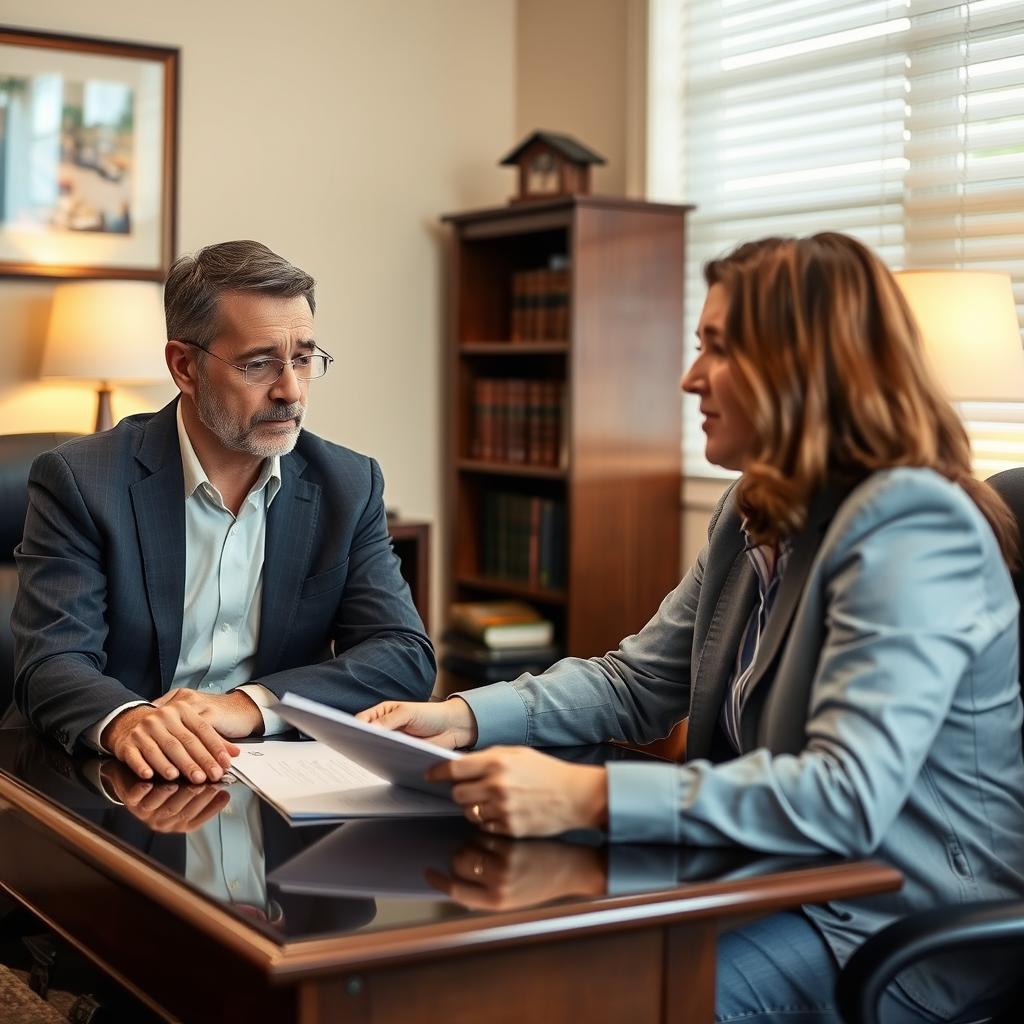
Property Settlement Lawyer Fluvanna County, VA
Property division is often the most financially significant part of a divorce. In Fluvanna County, Virginia, how a marital estate is divided can affect retirement, business interests, real estate, and long‑term financial stability. The Virginia courts apply the principles of equitable distribution under Va. Code § 20‑107.3. That does not mean a simple fifty‑fifty split; the court weighs eleven statutory factors to arrive at a division that is fair but not necessarily equal. When you face questions about what is separate property, what was commingled, or how a family business should be valued, experienced legal guidance helps you understand your options and protect your future. Mr. Sris and the firm’s Of Counsel attorneys represent clients in property settlement matters before the Fluvanna County Juvenile and Domestic Relations District Court and the Fluvanna County Circuit Court. To schedule a consultation, reach Law Offices Of SRIS, P.C. at (888) 437‑7747. Law Offices Of SRIS, P.C. – Advocacy Without Borders.
What Property Settlement Means in Fluvanna County
Property settlement in a Fluvanna County divorce is governed by Virginia’s equitable distribution statute. The Fluvanna County Circuit Court, located at 72 Main Street, Suite B in Palmyra, has exclusive jurisdiction over divorce and the division of marital assets. The Juvenile and Domestic Relations District Court handles related matters such as child support and protective orders, but the final classification and division of property occurs in Circuit Court. Because the Sixteenth Judicial District follows Virginia’s statutory framework, the outcome of a property settlement depends on how the court applies the eleven factors listed in Va. Code § 20‑107.3. Those factors include the duration of the marriage, the contributions of each spouse, the age and health of the parties, and the tax consequences of any division.
For families in Palmyra, Fork Union, and the Lake Monticello area, the practical realities of property settlement often involve the family home, a parcel of farmland along Route 15, or a retirement account built over decades. The court classifies property as marital, separate, or hybrid. Separate property—items owned before the marriage or received by gift or inheritance—stays with the original owner. Marital property is everything acquired during the marriage, regardless of whose name is on the title. When separate and marital property have been mixed together, the court may need to trace the original character of each asset. An attorney helps you present the tracing evidence and advocate for a division that reflects the true nature of your estate.
How Mr. Sris and the Firm’s Of Counsel Attorneys Handle Property Settlement Cases
Before filing anything with the Fluvanna County Circuit Court, the firm works to understand the full picture of your marital finances. We review deeds, account statements, business records, and tax returns to identify what belongs to the marital estate. Where necessary, we work with forensic accountants and business valuators to arrive at reliable values for assets such as a closely held business, professional practice, or investment portfolio. Our approach begins with negotiation. Many property settlements are resolved through a signed separation agreement that addresses property division, spousal support, and any related parenting issues. When a comprehensive agreement is reached, the uncontested divorce process may proceed without a contested trial.
If negotiation does not produce a resolution, the matter moves to litigation before the Fluvanna County Circuit Court. The court schedules a hearing and may require a pretrial settlement conference. During the hearing, both sides present evidence about the classification and value of disputed assets. The judge then applies the eleven equitable‑distribution factors to reach a final order. Because Virginia is an equitable distribution state, the division is not automatic and the judge has broad discretion. Presenting a clear, well‑organized case can make a meaningful difference in how the court weighs the factors. Mr. Sris and the firm’s Of Counsel attorneys have experience in high‑asset and complex‑property cases, including those involving family‑owned businesses, stock options, and international assets.
About Mr. Sris and the Firm’s Of Counsel Attorneys
Mr. Sris is Owner and Founder of Law Offices Of SRIS, P.C. A former prosecutor, he founded the firm in 1997 and has built a multi‑state practice admitted in Virginia, Maryland, the District of Columbia, New Jersey, and New York. His background includes testimony before the Virginia House Courts of Justice Committee in support of 2019 HB 635 (chief patron Del. David Bulova), a bill that revised the equitable‑distribution statute now found at Va. Code § 20‑107.3(g). That legislative involvement gives him a distinctive perspective on how property‑settlement law is written and applied. He concentrates his practice on family law, criminal defense, and immigration matters, and he personally oversees the property‑settlement cases handled by the firm.
The firm’s Of Counsel attorneys bring extensive combined legal experience to family law matters. Each Of Counsel attorney has a background in litigation, and the group includes former prosecutors and a former Virginia State Trooper. Because the firm has no employees and every non‑Sris attorney is Of Counsel, you benefit from a collaborative, team‑oriented approach without the layers of a traditional law firm. The Of Counsel attorneys have represented clients across the jurisdictions the firm serves, including before the Fluvanna County Circuit Court, and they understand the local procedures and expectations that can affect a property‑settlement case.
Frequently Asked Questions
Is Virginia a community property state?
No, Virginia is an equitable distribution state, not a community property state. That means marital property is divided fairly but not necessarily equally. The Fluvanna County Circuit Court applies the eleven factors in Va. Code § 20‑107.3 to determine what constitutes a fair division. Separate property—assets owned before the marriage, gifts, and inheritances—is typically not subject to division. For many families in Palmyra and Fork Union, the result is a division that reflects the length of the marriage and each spouse’s contributions, rather than a simple 50‑50 split.
What assets are divided in a Fluvanna County property settlement?
Marital property—everything acquired by either spouse during the marriage—is subject to equitable distribution. This includes real estate, bank accounts, retirement plans, vehicles, business interests, and debts. Assets that one spouse owned before the marriage or received as a gift or inheritance are separate and generally stay with that spouse. When separate and marital property have been commingled, as often happens with a house or a joint account, the court may need to trace the source of the funds. The firm’s Of Counsel attorneys work with financial attorneys when necessary to trace and value disputed assets.
Can we settle property division without going to court in Fluvanna County?
Yes, most property settlements are resolved through a written separation agreement without a trial. The spouses, with the help of their attorneys, negotiate a division of all marital assets and debts and record the agreement in a property settlement agreement. Once signed, the agreement is presented to the Fluvanna County Circuit Court as part of an uncontested divorce. Mediation is available but not mandatory in Virginia. A well‑prepared separation agreement can save time, reduce conflict, and give both parties more control over the outcome than a judge’s ruling.
What if my spouse is hiding assets or undervaluing property?
If you believe assets are being hidden or undervalued, the discovery process during litigation allows you to demand financial records and other evidence. Through interrogatories, requests for production of documents, and depositions, an attorney can uncover information about accounts, income, and property that may have been concealed. In high‑asset cases, forensic accountants and business valuators are often retained to determine the true value of a business or an investment portfolio. The firm has experience locating and valuing assets in complex property‑settlement matters and can help ensure the marital estate is fully disclosed.
Do I need a lawyer for a property settlement in Fluvanna County?
You are not required to have a lawyer, but property‑settlement issues—especially when they involve a house, retirement assets, or a family business—can have permanent financial consequences. An attorney can help you understand how the equitable‑distribution factors apply to your situation, identify all marital assets, and negotiate a fair settlement or prepare a strong case for trial. If you proceed without counsel and sign a separation agreement that later proves unfavorable, it can be difficult to modify. To discuss your specific circumstances, reach Law Offices Of SRIS, P.C. at (888) 437‑7747.
Additional Virginia Resources
For more information about Virginia property settlement law, you may review the official statutory authority and court resources:
– Virginia Code § 20‑107.3 – Equitable Distribution of Property
– Virginia Circuit Courts
– Virginia’s Judicial System
Attorney advertising. Prior results do not guarantee a similar outcome.
Case results depend on a variety of factors unique to each case.