
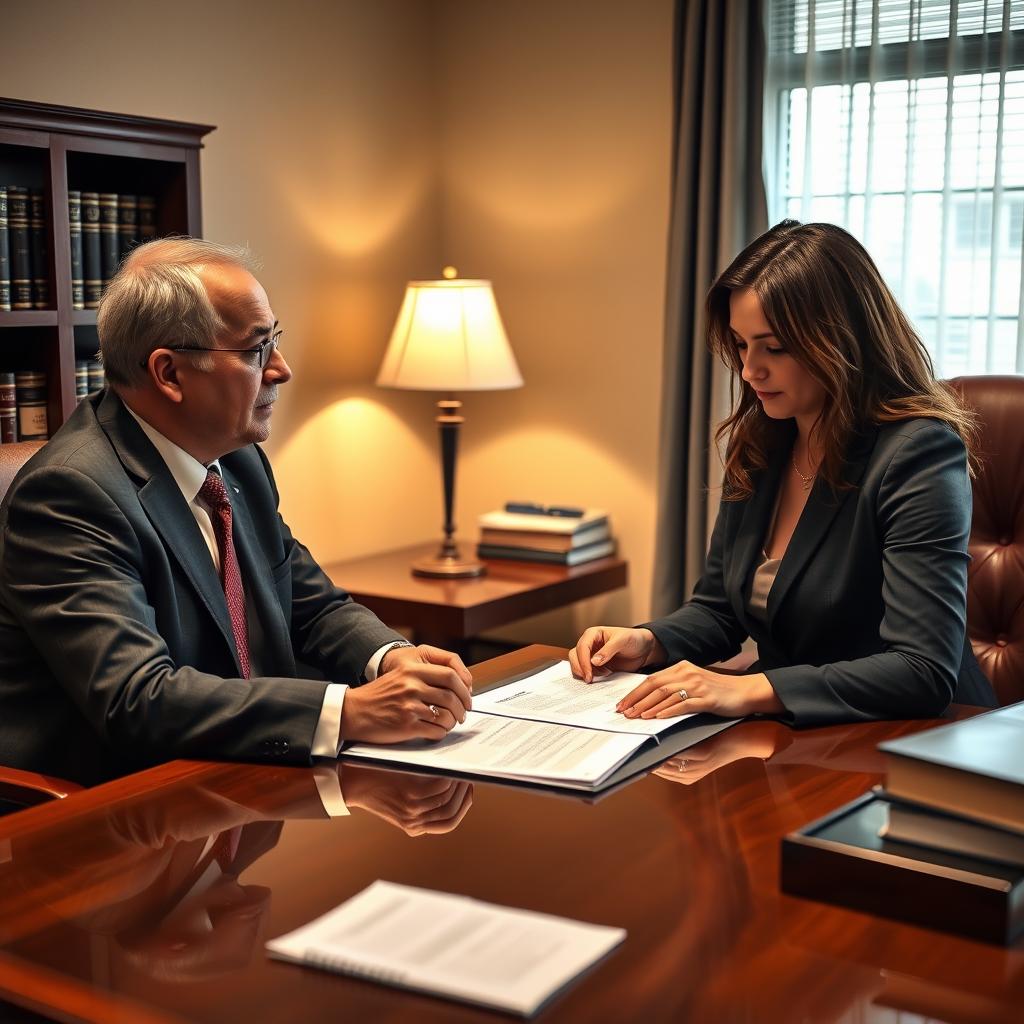
Adultery Divorce Lawyer Rockingham County, VA
Adultery is a fault-based ground for divorce in Virginia that can significantly affect the outcome of property division, spousal support, and even child custody. Under Va. Code § 20‑91(1), a spouse may seek an absolute divorce on the ground of adultery without a waiting period—unlike no‑fault divorces that require a period of separation. If you are considering filing for divorce or have been accused of adultery in Rockingham County, the case will be heard at the Rockingham County Circuit Court, located at 53 Court Square, Harrisonburg, VA 22801. Law Offices Of SRIS, P.C., founded in 1997, represents clients through this process from the firm’s Shenandoah Location. Mr. Sris, Owner and Founder, and his Of Counsel team are prepared to handle contested divorce proceedings, equitable distribution disputes, and related family law matters in Rockingham County. To discuss your situation with a qualified attorney, reach our location at (888) 437-7747. Law Offices Of SRIS, P.C. – Advocacy Without Borders.
What Adultery Divorce Means in Rockingham County
Virginia is an equitable distribution state, not a community property state. When a divorce is granted on the ground of adultery, the court may consider the marital misconduct when dividing marital assets and determining whether spousal support should be awarded. Under Va. Code § 20‑107.3, the judge evaluates a set of statutory factors to reach a fair distribution of property. In Rockingham County, divorce and equitable distribution matters are handled exclusively by the Rockingham County Circuit Court, part of the Twenty‑sixth Judicial District. The court has the authority to award a larger share of the marital estate to the innocent spouse if the adultery had a negative economic impact on the marriage. Additionally, a spouse found to have committed adultery is statutorily barred from receiving spousal support unless the court finds that a denial would be a manifest injustice.
Rockingham County, which encompasses Harrisonburg, Bridgewater, Dayton, Elkton, Timberville, and Broadway, falls within the Shenandoah Valley region. The local courts apply Virginia’s fault‑based divorce laws consistently with statewide precedent while also accounting for the factual nuances of each case. Because adultery is a fault ground that requires proof—often through circumstantial evidence—the strategy for presenting a case in Rockingham County Circuit Court can differ markedly from an uncontested divorce. Mr. Sris and his Of Counsel are experienced in handling the evidentiary demands and procedural requirements specific to fault‑based divorce litigation in this jurisdiction.
How Mr. Sris and His Of Counsel Handle Adultery Divorce Cases
Adultery divorce cases often involve contested proceedings where the accusing spouse must present evidence sufficient to prove the affair, while the accused spouse may challenge that evidence or raise defenses. Mr. Sris and his Of Counsel approach each matter by first evaluating the strength of the available proof, including electronic communications, financial records, witness statements, and private investigator reports. Because Virginia courts require clear and convincing evidence to prove adultery, thorough preparation is essential. The legal team works to build a comprehensive record while also protecting the client’s interests in related issues such as child custody, visitation, and support.
In Rockingham County, the divorce process begins with filing a Complaint in the Circuit Court. Once filed, the parties engage in discovery, during which each side may request documents and take depositions. Mr. Sris and his Of Counsel guide clients through each stage, from initial pleadings to negotiations and, if necessary, trial. The goal is to resolve the matter as efficiently as the facts allow—whether through a negotiated settlement or a court determination—while maintaining a focus on the client’s long‑term financial and family objectives.
About Mr. Sris and His Of Counsel Team
Mr. Sris, Owner and Founder of Law Offices Of SRIS, P.C., is a former prosecutor with extensive experience in litigation. Admitted in Virginia, Maryland, the District of Columbia, New Jersey, and New York, he has practiced family law since founding the firm in 1997. Mr. Sris testified before the Virginia House Courts of Justice Committee in support of 2019 HB 635 (chief patron Del. David Bulova). His Of Counsel team, all engaged through Excella, brings over 120 years of combined legal experience, and the firm has achieved 4,739+ documented firm-wide results. Results may vary. The firm’s attorneys concentrate their practice on family law, criminal defense, and traffic matters, and they appear regularly in Rockingham County courts.
Frequently Asked Questions
What is adultery divorce under Virginia law?
Adultery is a fault‑based ground for an absolute divorce in Virginia that allows the innocent spouse to seek a dissolution of the marriage without any mandatory separation period. Under Va. Code § 20‑91(1), a divorce may be granted when one spouse has committed adultery. The court must be presented with sufficient evidence to prove the adultery, which can include direct or circumstantial proof. Because adultery is a statutory fault ground, it can influence property division and spousal support determinations.
How does adultery affect property division in a Virginia divorce?
In an equitable distribution state like Virginia, the court may consider adultery as a factor when dividing marital property if the misconduct had a negative economic impact on the marriage. The judge examines the circumstances under Va. Code § 20‑107.3 and may award a larger share of the marital estate to the innocent spouse if the adultery resulted in the dissipation of marital assets, such as spending on an extramarital relationship. However, property division remains subject to the judge’s broad discretion and each case’s unique facts.
Can adultery impact child custody in Rockingham County?
Adultery alone does not automatically determine child custody, but the court will consider any conduct that affects the child’s best interests. Under Va. Code § 20‑124.3, the court evaluates ten statutory factors, including the role each parent has played in the child’s life. If the adulterous behavior created a harmful environment or disrupted the parent‑child relationship, the judge may weigh that conduct when deciding custody and visitation. The Rockingham County Juvenile and Domestic Relations District Court oversees standalone custody matters, while custody disputes within a divorce are resolved in the Circuit Court.
Do I need evidence of adultery to file for divorce in Virginia?
Yes, to obtain a divorce on the ground of adultery, the filing spouse must present evidence that satisfies the court’s standard of proof. Virginia requires clear and convincing evidence, which is a higher standard than the preponderance‑of‑the‑evidence standard used in most civil cases. Evidence may include photographs, phone records, witness testimony, or private investigator reports. An experienced attorney can help evaluate whether the available evidence is sufficient to proceed with a fault‑based divorce filing in Rockingham County Circuit Court.
How does Mr. Sris handle contested adultery divorce cases?
Mr. Sris and his Of Counsel take a detail‑oriented approach to contested adultery divorce cases, focusing on evidentiary development and strategic negotiation. The team reviews all financial and personal records, identifies weaknesses in the opposing side’s claims, and prepares for trial if a settlement cannot be reached. Because adultery cases often involve heightened emotions, the attorneys work to keep the process as manageable as possible while protecting the client’s rights regarding property, support, and parenting arrangements.
What should I bring to a consultation with a Rockingham County adultery divorce lawyer?
Bring any documents related to the marriage, including financial records, prenuptial agreements, evidence of the adultery, and any existing court orders regarding custody or support. Also helpful are a timeline of key events, communication logs, and a list of questions you have about the divorce process. This information allows the attorney to give a preliminary assessment of your case and helps you understand the legal options available under Virginia law. For a consultation with Mr. Sris and his Of Counsel, reach our location at (888) 437-7747.
Related Family Law Resources: Family Law Lawyer Clarke County, VA · Family Law Lawyer Shenandoah County, VA · Family Law Lawyer Frederick County, VA · Family Law Lawyer Warren County, VA · Family Law Lawyer Augusta County, VA
Primary Sources: Virginia Code § 20‑91 · Virginia Circuit Courts · Virginia Code Title 20
Attorney advertising. Prior results do not guarantee a similar outcome. Results may vary. Case results depend on a variety of factors unique to each case.