
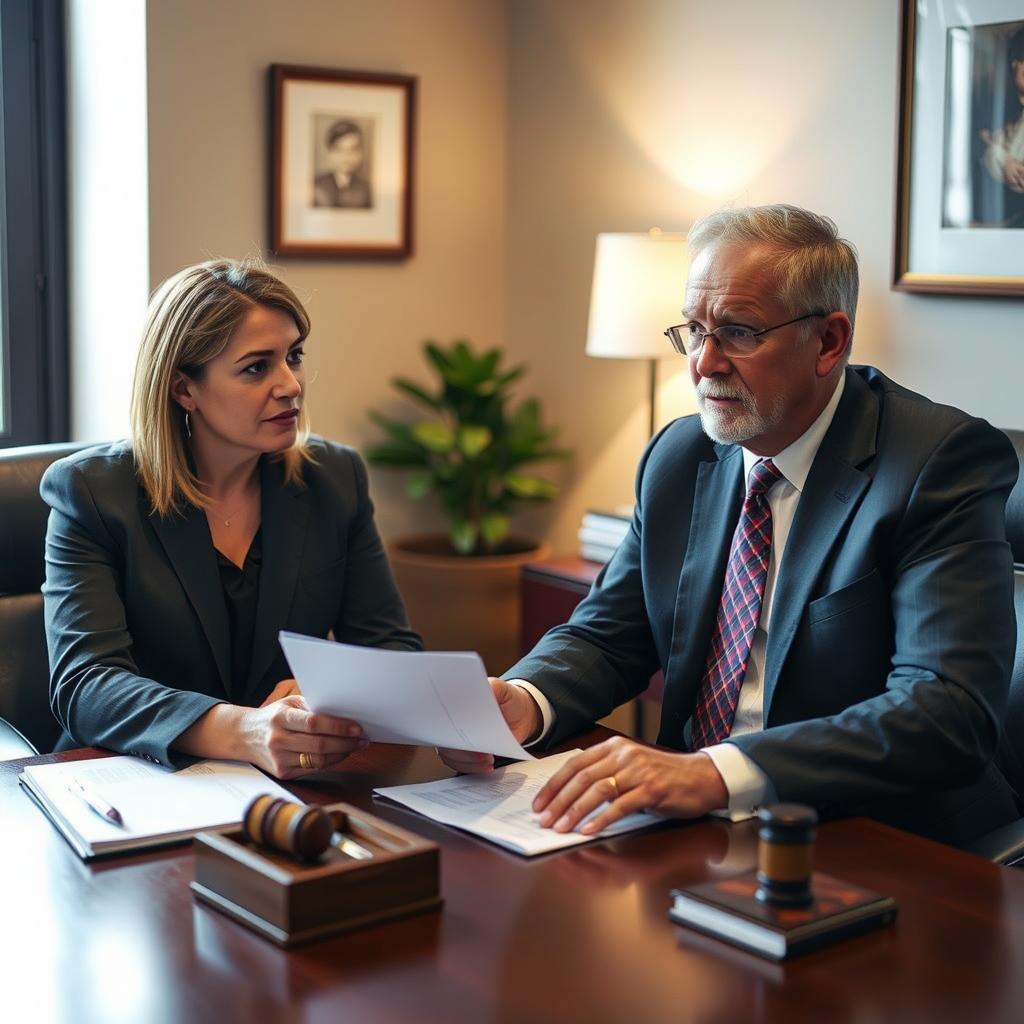
Adultery Divorce Lawyer Virginia Beach, VA
Adultery serves as a fault-based ground for divorce in Virginia under Va. Code § 20‑91(1).
Unlike the state’s no‑fault separation periods, an adultery‑based divorce carries no mandatory waiting period once the required proof is established.
The Virginia Beach Circuit Court, located at 2425 Nimmo Parkway, Building 10B, holds exclusive jurisdiction over divorce and equitable distribution matters, while the Virginia Beach Juvenile & Domestic Relations District Court handles related custody, support, and protective‑order issues.
Mr. Sris, Owner and Founder of Law Offices Of SRIS, P.C., understands how to navigate the evidentiary requirements and the court procedures specific to the Fourth Judicial District.
For a consultation about an adultery divorce matter in Virginia Beach, reach our location at (888) 437‑7747.
What Adultery Divorce Means in Virginia Beach
Adultery divorce in Virginia allows a spouse to file for an immediate, fault‑based dissolution of the marriage.
Because adultery is listed as a fault ground, the complaining party does not need to satisfy the six‑month or one‑year separation period that governs no‑fault divorces.
Once the evidence is sufficient to prove the adultery, the Circuit Court may proceed to a final decree on an accelerated timeline.
Virginia Beach’s Circuit Court hears all divorce, equitable distribution, and spousal‑support matters, while the Juvenile & Domestic Relations Court addresses any standalone custody, visitation, or child‑support disputes that may arise during the proceeding.
In Virginia Beach, the court will evaluate whether the evidence establishes that the spouse engaged in voluntary sexual intercourse with a person outside the marriage.
Adultery findings can affect multiple dimensions of the case: a judge may consider the misconduct when dividing marital property under Va. Code § 20‑107.3, when determining spousal support under Va. Code § 20‑107.1, and when weighing the trusted‑interests factors for child custody under Va. Code § 20‑124.3.
Because Virginia is an equitable‑distribution state, property is divided fairly—not necessarily equally—and a finding of adultery may influence how the court applies the statutory factors.
Our Richmond location represents clients throughout the Virginia Beach area, including Sandbridge, Oceana, and communities along Shore Drive and the I‑264 corridor.
Mr. Sris and his Of Counsel are familiar with local procedural expectations and work to build a record that accurately presents the factual and legal circumstances.
How Mr. Sris and His Of Counsel Handle Adultery Divorce Cases
An adultery divorce matter typically begins with an in‑depth review of the factual background to assess how the evidence will align with the requirements of Va. Code § 20‑91(1).
The firm gathers and evaluates documentation—such as communications, financial records, and witness statements—to determine whether the adultery can be proved by clear and convincing evidence, which is the standard often applied in fault‑ground cases.
Because Virginia does not require a waiting period once the fault ground is established, the case may move from filing to final hearing more quickly than a no‑fault divorce.
Mr. Sris and his Of Counsel build a strategy that accounts for how a fault finding could affect property division, support, and parenting arrangements.
At the Virginia Beach Circuit Court, experience with local judges’ expectations regarding proof and presentation can be valuable.
The team addresses related issues that frequently arise in adultery cases: the potential for fault to bar or reduce spousal support under Va. Code § 20‑107.1, the role of marital misconduct in equitable distribution under Va. Code § 20‑107.3, and how custody and visitation schedules may be shaped by the circumstances.
Throughout the process, the firm works to resolve contested issues through negotiation where possible, while remaining prepared to present the matter at trial if a settlement cannot be reached.
To discuss how an adultery‑based divorce might proceed in Virginia Beach, reach Law Offices Of SRIS, P.C. at (888) 437‑7747.
About Mr. Sris and His Of Counsel Team
Mr. Sris, Owner and Founder of Law Offices Of SRIS, P.C., has been practicing since 1997 and is admitted in Virginia, Maryland, the District of Columbia, New Jersey, and New York.
His background includes experience as a former prosecutor, giving him insight into the investigative and evidentiary aspects that matter in fault‑based divorce proceedings.
Mr. Sris testified before the Virginia House Courts of Justice Committee in support of 2019 HB 635 (chief patron Del. David Bulova), a bill that revised the equitable‑distribution statute that governs how property is divided in Virginia divorces.
His Of Counsel—each an experienced, independent attorney engaged through the firm—bring over 120 years of combined legal experience between Mr. Sris and his Of Counsel to every family‑law matter, with 4,739+ documented firm-wide results. Results may vary.
The collective team has handled many different types of family‑law cases throughout Virginia, including contested and uncontested divorce, child‑custody disputes, and equitable‑distribution matters involving complex assets.
While Mr. Sris is the attorney responsible for this advertising, the firm draws on the knowledge of its full roster when developing strategies for adultery divorce litigation in Virginia Beach.
Frequently Asked Questions
What are the grounds for an adultery divorce in Virginia?
Virginia law recognizes adultery as a fault ground for divorce under Va. Code § 20‑91(1), carrying no mandatory separation period once the court accepts the proof.
To obtain a divorce on this ground, the complaining spouse must present evidence that the other spouse voluntarily engaged in sexual intercourse with someone outside the marriage.
While the statute does not require a corroborating witness in all circumstances, the level of proof needed may vary depending on the specific facts.
Because a finding of adultery can affect property division, spousal support, and child‑custody determinations, it is advisable to consult an experienced attorney early in the process.
How does proving adultery affect property division in a Virginia Beach divorce?
Virginia is an equitable‑distribution state, and a judicial finding of marital misconduct, including adultery, is one of the factors the court may consider under Va. Code § 20‑107.3 when dividing marital property.
The court will also weigh the duration of the marriage, the contributions of each spouse, the ages and health of the parties, and other statutory factors.
In some cases, a fault finding can lead to a distribution that is not equal, but the outcome depends on the full factual record.
Because the Virginia Beach Circuit Court has broad discretion in applying the factors, representation that thoroughly presents the evidence and the financial circumstances can influence the final disposition.
Will adultery impact child custody decisions in Virginia Beach?
A court in Virginia Beach determines custody based solely on the best interests of the child, using the ten factors listed in Va. Code § 20‑124.3, and adultery is not an automatic bar to custody.
The court’s focus remains on the child’s relationship with each parent, the stability of the home environment, and each parent’s willingness to support the child’s relationship with the other parent.
However, if the adultery is accompanied by other conduct that affects the child’s well‑being—such as neglect, abuse, or an unsafe environment—the court may factor that conduct into its custody and visitation determination.
The Virginia Beach Juvenile & Domestic Relations District Court handles standalone custody matters, while the Circuit Court addresses custody in the context of a divorce.
Do I need a lawyer to file an adultery divorce in Virginia Beach?
There is no legal requirement to hire a lawyer, but an adultery divorce implicates fault‑based proof standards and can significantly affect property rights, support obligations, and parenting time, making legal guidance useful.
Gathering admissible evidence, presenting it effectively to the Virginia Beach Circuit Court, and understanding how a fault ground interacts with equitable distribution and support statutes are areas where counsel can help.
The procedural rules and local practices of the Fourth Judicial District may differ from those in other localities, and an attorney familiar with the Virginia Beach courts can help anticipate what the court expects.
For a consultation about your particular circumstances, reach Mr. Sris and his Of Counsel at (888) 437‑7747.
What should I bring to a consultation about an adultery divorce?
Bring any documents that could help the attorney assess the marriage’s financial picture and the potential evidence of adultery—such as financial statements, communications, and a timeline of events.
The consultation will cover the legal standard under Va. Code § 20‑91(1), the impact on property division and support, and the practical steps involved in filing at the Virginia Beach Circuit Court.
If child‑related issues are part of the case, any existing parenting plans, school records, or previous court orders should also be available.
The more information you provide, the more specific the initial guidance can be.
How do I find an adultery divorce lawyer in Virginia Beach?
Look for a family‑law attorney who handles contested fault‑based divorces in the Virginia Beach Circuit Court and who is familiar with the evidentiary requirements of adultery cases.
Evaluating an attorney’s experience with equitable distribution, spousal support, and the interplay of fault grounds can help you make an informed decision.
You can also review the attorney’s bar admissions and credentials, ask about their familiarity with the Virginia Beach courts, and schedule a consultation to discuss your matter.
To speak with Mr. Sris and his Of Counsel about an adultery divorce in Virginia Beach, call (888) 437‑7747.
Related family law resources:
Family law representation in Fairfax County —
Family law matters in Prince William County —
Family law legal guidance in Manassas
Attorney advertising. Prior results do not guarantee a similar outcome.
Case results depend on a variety of factors unique to each case.
Results may vary.