
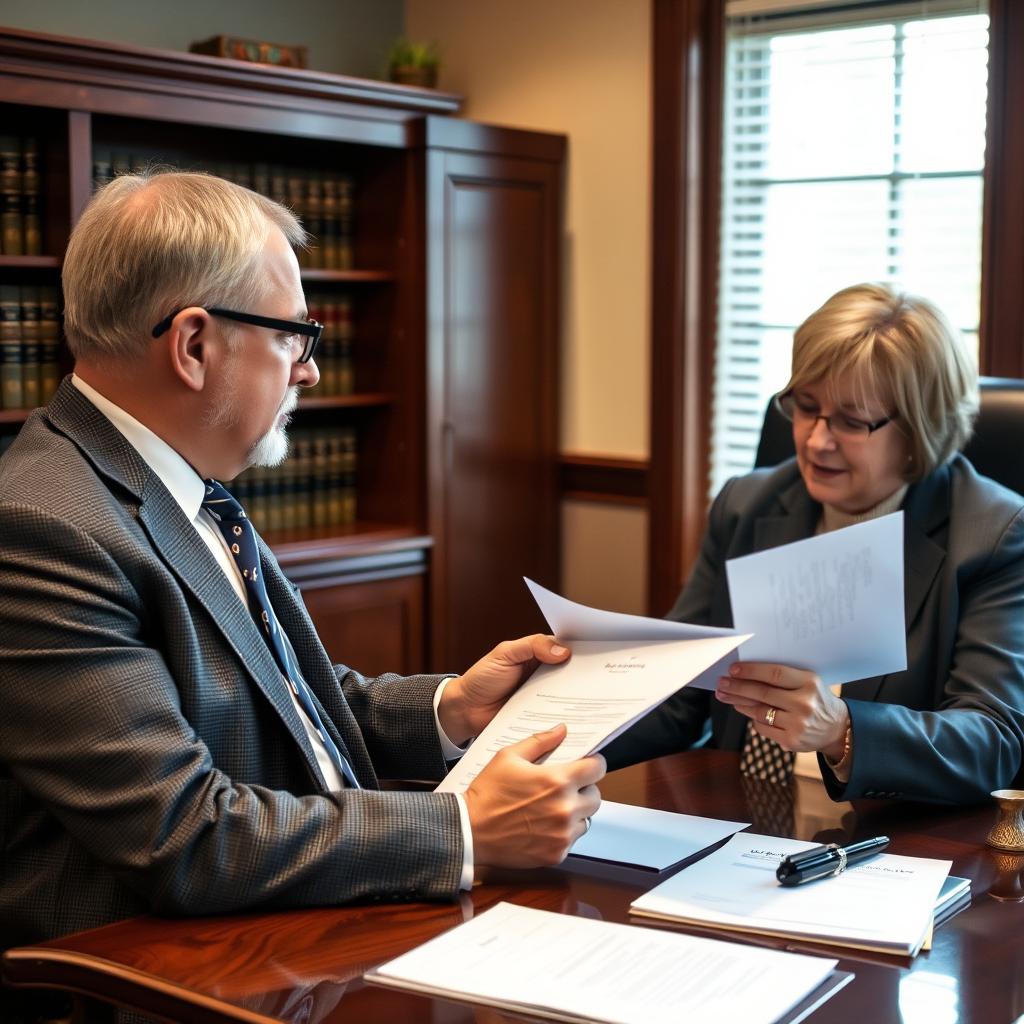
Armed Forces Divorce Lawyer Rappahannock County
An Armed Forces Divorce Lawyer Rappahannock County handles the unique legal dissolution for military members stationed in or connected to Virginia. Law Offices Of SRIS, P.C.—Advocacy Without Borders. provides direct counsel on jurisdiction, asset division, and support under federal and state laws. Service members in Rappahannock County face specific procedural hurdles in family court. Our team addresses these challenges directly. (Confirmed by SRIS, P.C.)
Statutory Definition of Military Divorce in Virginia
Virginia law governs divorce for all residents, including service members, with specific statutes addressing military circumstances. The core divorce statute is Va. Code § 20-91, which establishes grounds for dissolution. For military families, the Servicemembers Civil Relief Act (SCRA) provides critical protections against default judgments during active duty. Jurisdiction over a service member is established under Va. Code § 20-97, which includes specific rules for members stationed in Virginia. A military member divorce lawyer Rappahannock County must handle both state divorce codes and federal military protections. The classification of divorce as either no-fault or fault-based determines the process and timeline. Understanding these intersecting laws is the first step in any military dissolution case in Rappahannock County.
Va. Code § 20-91 — Grounds for Divorce — Determines Residency and Separation Periods. This statute lists the legal reasons for ending a marriage in Virginia. For a no-fault divorce, it requires a one-year separation if no minor children exist. If children are involved, the separation period is one year. Fault-based grounds include adultery, cruelty, desertion, or felony conviction. For service members, proving Virginia residency under this statute is a primary concern. A service member dissolution lawyer Rappahannock County uses this code to build the initial petition.
How does the SCRA affect a divorce filing timeline?
The Servicemembers Civil Relief Act can significantly delay court proceedings. This federal law allows active-duty members to request a stay of civil proceedings, including divorce. A judge must grant a minimum 90-day stay upon application. This protection prevents a service member from being defaulted while deployed or unable to appear. Your Armed Forces Divorce Lawyer Rappahannock County will advise on when to invoke or waive this right.
What defines residency for a service member in Virginia?
Residency is established by physical presence or domicile intent under Va. Code § 20-97. A service member can claim Virginia residency if stationed here pursuant to military orders. This is true even if the member maintains a legal domicile in another state. The filing spouse must also meet the six-month Virginia residency requirement. Proving this military-based residency is a key task for your attorney.
How are military pensions divided under Virginia law?
Military pensions are marital property subject to division under the Uniformed Services Former Spouses’ Protection Act (USFSPA). Virginia is a “dual classification” state, meaning only the portion of the pension earned during the marriage is divisible. A court order known as a Qualified Domestic Relations Order (QDRO) is required for direct payment from the Defense Finance and Accounting Service (DFAS). Calculating the exact marital portion requires precise dates of service and marriage.
The Insider Procedural Edge in Rappahannock County
The 20th Judicial Circuit of Virginia serves Rappahannock County, with family law matters heard at the county courthouse. Procedural specifics for Rappahannock County are reviewed during a Consultation by appointment at our Rappahannock County Location. The court follows Virginia Supreme Court rules but has local customs for scheduling and hearings. Knowing the local clerk’s requirements for filing military-related motions is crucial. A service member dissolution lawyer Rappahannock County with experience here can anticipate these local rules. Learn more about Virginia family law services.
What is the specific court address for filing?
Divorce cases are filed at the Rappahannock County Circuit Court. The address is 252 Gay Street, Washington, VA 22747. All initial complaints for divorce must be submitted to the Clerk of the Circuit Court at this location. Filing fees are set by the state and must be paid at the time of submission. Electronic filing may be available for certain documents.
What are the key procedural steps and timeline?
The process begins with filing a Complaint for Divorce and serving the other party. If the spouse is on active duty, special service rules under the SCRA apply. The case may proceed through discovery, hearings, and potentially a final decree hearing. An uncontested divorce with a separation agreement can be faster. A contested case involving military issues can take over a year to resolve.
Penalties, Division, and Defense Strategies
Divorce does not carry criminal penalties, but financial and custodial consequences are severe. The court divides assets, sets support, and establishes custody based on Virginia law. For military members, incorrect filing can lead to loss of jurisdiction over pensions or improper support orders. A military member divorce lawyer Rappahannock County defends against unfair divisions that don’t account for military pay and benefits.
| Issue | Potential Outcome | Notes |
|---|---|---|
| Equitable Distribution | Division of marital property, including military pension portion. | VA is an equitable distribution state, not community property. |
| Spousal Support | Monthly payments based on need, ability to pay, and standard of living. | Military pay, BAH, and BAS are considered income for calculations. |
| Child Support | Guideline-based support following Virginia Code § 20-108.2. | Military basic pay, allowances, and special pay are included in gross income. |
| Child Custody | Physical/legal custody orders considering military deployment schedules. | Parenting plans must address potential relocation due to PCS orders. |
| Division of Military Benefits | QDRO required for direct pension payment; potential share of medical benefits. | Former spouse may retain TRICARE eligibility under the 20/20/20 rule. |
[Insider Insight] Rappahannock County judges are familiar with military families due to the county’s proximity to major installations. They expect clear documentation of military income and deployment schedules. Proposals for parenting plans that proactively address potential deployments are viewed favorably. Judges here apply Virginia support guidelines strictly but consider the unique volatility of military pay.
How is military income calculated for support?
All military pay and allowances are included as gross income for support calculations. This includes Basic Pay, Basic Allowance for Housing (BAH), Basic Allowance for Subsistence (BAS), and special duty pay. The Virginia child support guidelines software inputs this total figure. For spousal support, the court considers this same income stream and its potential fluctuation post-service. Learn more about criminal defense representation.
What is the 20/20/20 rule for military benefits?
This rule governs a former spouse’s eligibility for military medical benefits (TRICARE) and commissary privileges. The marriage must have lasted at least 20 years. The service member must have at least 20 years of creditable service. The 20 years of marriage must overlap 20 years of service. If all three conditions are met, the former spouse retains full benefits indefinitely.
Why Hire SRIS, P.C. for Your Military Divorce
Our lead attorney for military family law in Virginia has over a decade of focused experience with the USFSPA and SCRA. SRIS, P.C. has a dedicated team that understands the pressure on service members. We translate military life into legal arguments that Rappahannock County judges comprehend. Our approach is direct and strategic, aimed at securing stable outcomes for your family and career.
Primary Attorney: Our senior family law attorney has represented numerous active-duty and veteran clients in Rappahannock County. This attorney’s background includes specific training on the division of military pensions and the drafting of military-specific parenting plans. They have successfully argued jurisdictional issues for deployed members before the 20th Judicial Circuit. Their practice is focused on the intersection of Virginia divorce law and federal military statutes.
SRIS, P.C. has achieved favorable results for service members in Rappahannock County. We prepare cases with the understanding that military orders can change timelines instantly. Our team coordinates with our experienced legal team across Virginia to ensure consistent advocacy. We know how to protect your pension, your parental rights, and your financial stability. Choosing a firm with this specific focus is critical.
Localized Rappahannock County Military Divorce FAQs
Can I file for divorce in Rappahannock County if I’m deployed?
Yes, you can file, but the SCRA allows you to request a stay of proceedings. Your attorney can file the initial complaint on your behalf. Service of process on your spouse must still be accomplished legally. A military member divorce lawyer Rappahannock County can manage the filing remotely. Learn more about personal injury claims.
How is my VA disability pay treated in a divorce?
VA disability compensation is generally not considered marital property subject to division. It is also typically excluded from gross income for child support calculations in Virginia. However, it can be considered for spousal support purposes regarding the recipient’s need. The treatment is complex and requires precise legal analysis.
What happens to my military housing allowance (BAH) during divorce?
BAH is included as gross income for calculating child and spousal support. If you are required to move out of government housing, the court may consider the loss of this benefit. The amount is verifiable through your Leave and Earnings Statement (LES). Your attorney will ensure it is calculated correctly.
Can a civilian spouse keep military ID card privileges after divorce?
Privileges depend on the 20/20/20 rule. If the rule is met, the spouse retains full ID card benefits. If the 20/20/15 rule is met, the spouse retains benefits for one year. If no rule is met, benefits terminate the day the divorce is final. Your lawyer can clarify your specific eligibility.
How does a Permanent Change of Station (PCS) order affect custody?
A PCS move requires a modification to the existing custody or visitation order. The military parent must provide notice as required by law. The court will consider the best interests of the child and the necessity of the move. Parenting plans should include protocols for potential future PCS orders.
Proximity, Contact, and Critical Disclaimer
Our Rappahannock County Location is positioned to serve clients throughout the county and surrounding areas. We are accessible to military families from all branches. For a Consultation by appointment to discuss your case with an Armed Forces Divorce Lawyer Rappahannock County, call our team 24/7. We provide direct legal guidance for service members facing family law matters in Virginia.
Law Offices Of SRIS, P.C. —Advocacy Without Borders.
Consultation by appointment. Call 24/7.
Past results do not predict future outcomes.