
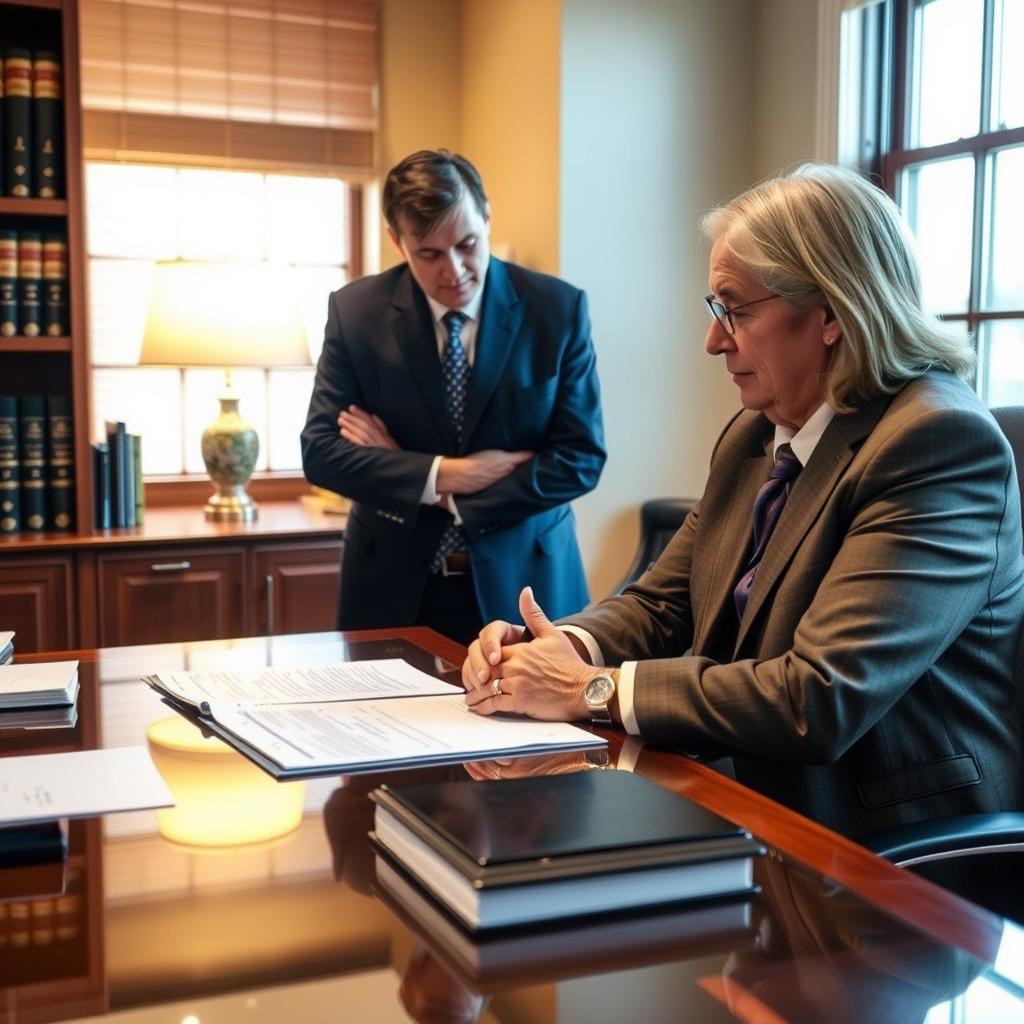
Fault Based Divorce Lawyer King William County, VA
You discovered your spouse was unfaithful. The marriage, once a partnership built on trust, now feels irreparably broken. You are not sure what to do next, but you know you cannot continue as things are. For many spouses in King William County, filing for a fault-based divorce is the path that aligns with their sense of justice and allows them to move forward without waiting through a long separation period. Law Offices Of SRIS, P.C. represents individuals across King William County—including King William, West Point, and Aylett—who want to assert fault grounds for divorce under Virginia law. Mr. Sris and his Of Counsel team bring extensive experience to these emotionally charged matters, working to protect your rights while you rebuild. Contact us at (888) 437-7747 to request a consultation about whether a fault-based divorce is right for your situation. Law Offices Of SRIS, P.C. – Advocacy Without Borders.
What Fault Based Divorce Means in King William County
Virginia is an equitable distribution state, not a community property state. When a divorce proceeds on fault grounds, the court may consider the circumstances that led to the breakdown of the marriage when dividing marital assets and debts. The King William County Circuit Court, located at 351 Courthouse Lane, Suite 201, King William, Virginia, handles all divorce, equitable distribution, and spousal support matters. The King William County Juvenile and Domestic Relations District Court addresses custody, visitation, child support, and protective orders when they arise separately from a divorce action.
Fault grounds available under Virginia Code § 20-91 include adultery, cruelty, willful desertion for one year, and conviction of a felony with imprisonment for more than one year. Unlike no-fault divorce—which requires a six-month separation with a signed settlement agreement and no minor children, or a one-year separation—fault-based divorce can proceed without a waiting period when adultery is established. Mr. Sris and his Of Counsel regularly guide clients through the evidentiary requirements for fault claims in King William County and explain how a fault ground can affect property division and spousal support. Cases are highly fact-specific, and the decision to pursue fault grounds should be made after a careful review of the circumstances with experienced counsel.
How Mr. Sris and His Of Counsel Handle Fault Based Divorce Cases
Every fault-based divorce requires credible evidence. Mr. Sris and his Of Counsel work methodically to build the record necessary to meet the court’s standards. This often involves gathering communications, financial records, testimony from witnesses, and other documentation that can support the alleged fault ground. Because Virginia courts require corroboration even in uncontested divorces, careful preparation is essential from the outset.
Once the evidence is assembled, Mr. Sris and his Of Counsel evaluate whether the fault ground is provable and how it will influence the broader divorce negotiation or litigation. In many cases, the mere availability of strong fault evidence can lead to a favorable settlement on equitable distribution and support, avoiding the need for a contested trial. When trial is necessary, Mr. Sris and his Of Counsel present the evidence before the King William County Circuit Court. The firm’s collective experience—spanning over 120 years and supported by 4,739+ documented firm-wide results—provides a steady, methodical approach to these high-stakes disputes. Results may vary.
About Mr. Sris and His Of Counsel Team
Mr. Sris, Owner and Founder of Law Offices Of SRIS, P.C., has practiced family law since 1997. He has testified before the Virginia House Courts of Justice Committee in support of 2019 HB 635 (chief patron Del. David Bulova), a bill that revised the equitable distribution statute. His understanding of Virginia’s property division framework runs deep, and he applies that knowledge to every fault-based divorce he handles.
Mr. Sris is supported by a team of Of Counsel attorneys, each of whom brings decades of litigation and courtroom experience to the firm. Together, Mr. Sris and his Of Counsel bring over 120 years of combined legal experience, with 4,739+ documented firm-wide results, to family law matters. Results may vary. They serve clients from the firm’s Richmond location at 7400 Beaufont Springs Drive, Suite 300, Room 395, Richmond, VA 23225, and appear regularly in the King William County courts. The team’s familiarity with local court procedures—including the distinct roles of the Circuit Court and the Juvenile and Domestic Relations District Court—enables efficient, well-prepared representation.
Frequently Asked Questions
What fault grounds can I use to file for divorce in King William County?
Virginia law permits four fault grounds for divorce: adultery, cruelty, willful desertion for at least one year, and conviction of a felony that results in imprisonment for more than one year. The most commonly asserted fault ground is adultery, which, if proven, allows the divorce to proceed without the waiting period required for no-fault divorce. The King William County Circuit Court hears all fault-based divorce cases and will require corroborating evidence, such as witness testimony or documentary proof. Because fault grounds can affect property distribution and spousal support, anyone considering this approach should discuss the evidentiary demands with an attorney familiar with the local court.
How does a fault-based divorce affect property division in Virginia?
Virginia courts divide marital property equitably, not equally, and may consider the circumstances that contributed to the dissolution of the marriage, including fault, when making that division. Under Virginia Code § 20-107.3, the judge weighs multiple factors, and a spouse’s misconduct—such as adultery or cruelty—can influence the final award. However, the impact of fault on property division is not automatic and varies case by case. Mr. Sris and his Of Counsel evaluate whether the fault ground in your case is likely to sway the court and help you decide whether pursuing fault grounds is strategically advantageous.
Do I need to prove fault to get a divorce in King William County?
No, Virginia also allows no-fault divorce based on a separation period of six months or one year, depending on whether minor children are involved and whether a separation agreement has been signed. Fault grounds are an option for those who do not want to wait through a separation period or who believe that the spouse’s misconduct should be formally recognized by the court. The decision to pursue fault versus no-fault depends on your goals, the available evidence, and the potential impact on other divorce issues. An attorney can explain both paths and help you choose the one that best serves your interests.
How long does a fault-based divorce take in King William County?
The time frame depends on whether the divorce is contested, the complexity of the evidence, and the court’s calendar. An uncontested fault-based divorce, where the other spouse does not dispute the ground and all issues are resolved by agreement, can move through the King William County Circuit Court relatively quickly once the necessary corroborating testimony is in place. Contested fault divorces, particularly those involving custody or extensive property disputes, routinely take longer. Mr. Sris and his Of Counsel prepare every case for efficient resolution but do not guarantee a specific timeline.
What local court procedures should I know about divorce in King William County?
The King William County Circuit Court, located at 351 Courthouse Lane, Suite 201, requires a complaint to initiate the divorce, and at least one corroborating witness must testify at the final hearing, even if the divorce is uncontested. The Juvenile and Domestic Relations District Court handles custody, visitation, and support matters that arise before or during the divorce. Mediation is available but not mandatory, and forensic accountants or business valuation attorneys are often used in complex marital estates. Understanding these local practices can help you anticipate what lies ahead, and Mr. Sris and his Of Counsel are familiar with the expectations of the judges and staff in this Ninth Judicial District county.
Related pages:
Official Virginia resources:
Virginia Code Title 20 (Domestic Relations) ·
King William County Circuit Court
Attorney advertising. Prior results do not guarantee a similar outcome.
Results may vary.
Case results depend on a variety of factors unique to each case.