
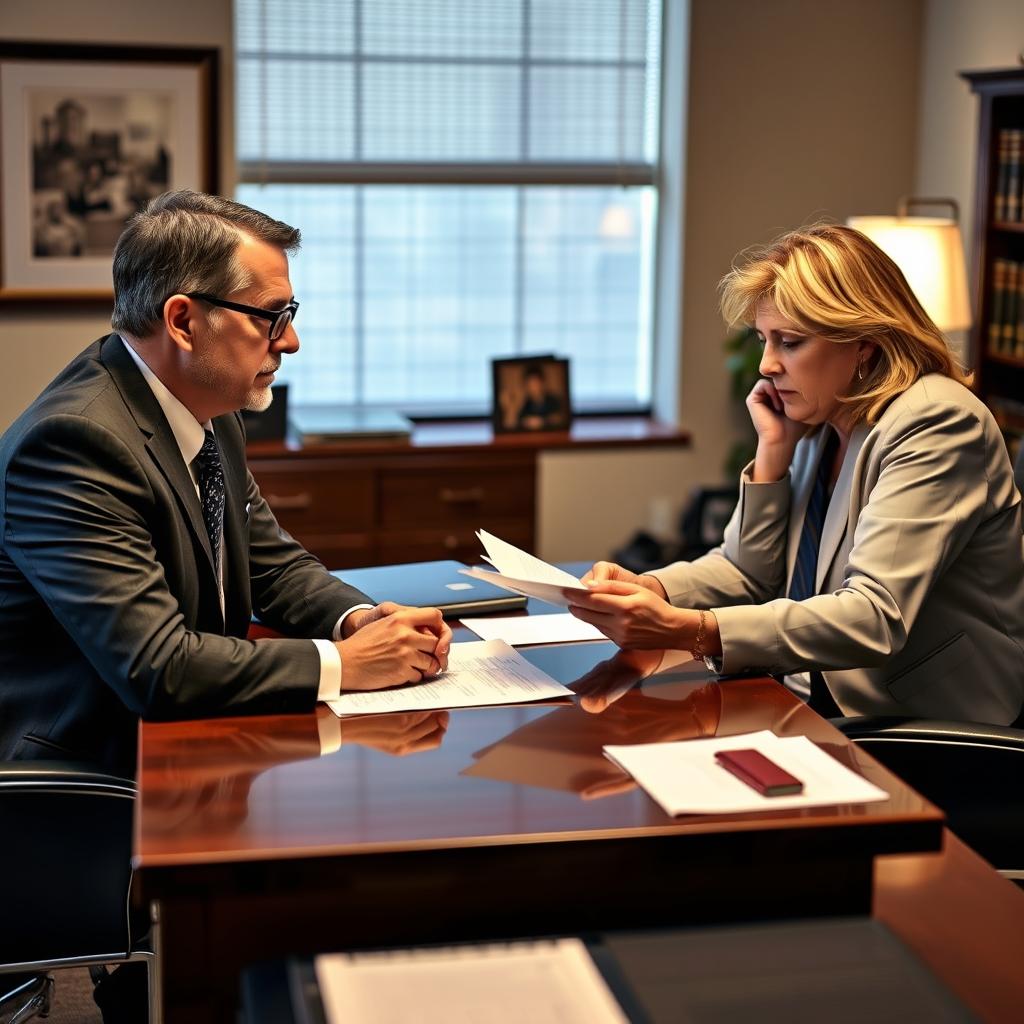
Fault Based Divorce Lawyer Rockingham County, VA
A fault-based divorce in Rockingham County, Virginia, is grounded in a legally recognized marital offense under Va. Code § 20‑91. The statute provides that a divorce may be granted when one spouse proves the other committed adultery, cruelty, willful desertion for at least one year, or has been convicted of a felony and sentenced to more than one year of confinement. Filing for a fault-based divorce does not require a mandatory separation period and can directly affect spousal support, property division, and even custody. Mr. Sris and his Of Counsel represent clients in fault-based divorce matters before the Rockingham County Circuit Court, located at 53 Court Square, Harrisonburg, Virginia. Law Offices Of SRIS, P.C. serves individuals and families throughout Rockingham County and the surrounding Shenandoah Valley communities. To discuss how a fault-based divorce may apply to your situation, call (888) 437‑7747.
Law Offices Of SRIS, P.C. – Advocacy Without Borders.
What Fault-Based Divorce Means in Rockingham County
Fault-based divorce is not simply an allegation of unhappiness; it is a statutory cause of action that requires the moving party to provide evidence establishing one of the specific grounds enumerated in Va. Code § 20‑91. In Rockingham County, these matters are heard exclusively by the Rockingham County Circuit Court, which has original jurisdiction over all suits for divorce under Va. Code § 20‑96. The court sits at the historic courthouse at 53 Court Square in downtown Harrisonburg, within the Twenty‑sixth Judicial District of Virginia. Because fault grounds are adjudicated through contested proceedings, the process typically involves discovery, witness testimony, and careful examination of the conduct alleged.
Residents of Harrisonburg, Bridgewater, Dayton, Elkton, Timberville, Broadway, and other Rockingham County communities who pursue a fault-based divorce benefit from understanding how local practice affects the presentation of fault evidence. The Circuit Court evaluates claims of adultery, cruelty, desertion, or felony conviction by looking at the totality of the circumstances. The same court that rules on the divorce also applies equitable distribution principles under Va. Code § 20‑107.3 to divide marital assets. The outcome can significantly change the financial picture for both spouses, especially when the fault ground is found to have affected the marital estate.
How Mr. Sris and His Of Counsel Handle Fault-Based Divorce Cases
Mr. Sris and his Of Counsel approach every fault-based divorce matter with an understanding that the client’s financial and personal future is at stake. The firm’s role includes evaluating whether the facts meet the evidentiary standard for a fault ground, preparing the Complaint to be filed in the Rockingham County Circuit Court, and if necessary, litigating the case through trial. Because Virginia does not require a separation period for certain fault grounds, a well‑pleaded fault claim can move the case toward resolution more directly than a no‑fault filing, though the exact timeline depends on court scheduling and the complexity of the issues.
The legal team works to develop the record needed to prove or refute fault by obtaining documents, interviewing witnesses, and when appropriate, working with forensic accountants or other professionals to trace any financial impact of the misconduct. Throughout the process, Mr. Sris and his Of Counsel remain available to discuss settlement opportunities, including whether a property settlement agreement can resolve the economic aspects while still preserving the fault‑based divorce decree. Every step is guided by the statutory framework and the specific expectations of the Rockingham County Circuit Court.
About Mr. Sris and His Of Counsel Team
Mr. Sris, Owner and Founder of Law Offices Of SRIS, P.C., has concentrated his practice on family law matters since founding the firm in 1997. A former prosecutor, he brings decades of trial experience to fault‑based divorce litigation. Mr. Sris is admitted to practice in Virginia, Maryland, the District of Columbia, New Jersey, and New York. He testified before the Virginia House Courts of Justice Committee in support of 2019 HB 635 (chief patron Del. David Bulova). His Of Counsel team contributes additional background in family law, criminal defense, and civil litigation, enabling the firm to handle multi‑faceted divorce matters.
Mr. Sris and his Of Counsel bring over 120 years of combined legal experience and have achieved 4,739+ documented firm-wide results. Results may vary. The collective knowledge includes familiarity with the judges, procedures, and evidentiary expectations of the Rockingham County Circuit Court. When you engage the firm, you gain access to a team that understands both the statutory law and the local courtroom environment. Consultations are by appointment; call (888) 437‑7747 to schedule.
Frequently Asked Questions
What are the grounds for a fault-based divorce in Virginia?
A fault-based divorce in Virginia may be granted on the grounds of adultery, cruelty, willful desertion for at least one year, or felony conviction resulting in a sentence of confinement for more than one year. These grounds are set out in Va. Code § 20‑91. A spouse alleging any of these grounds must present evidence sufficient to prove the fault to the Rockingham County Circuit Court. Unlike a no‑fault divorce, a fault‑based divorce does not require a separation period, which may affect the timeline of the proceeding. The court will consider how the proven fault may influence spousal support and property division.
How does fault affect property division in Virginia?
Virginia is an equitable distribution state, meaning the court divides marital property fairly but not necessarily equally, and the court may consider a spouse’s fault if it had an economic impact on the marriage. Under Va. Code § 20‑107.3, the court weighs eleven statutory factors, which include the circumstances and factors that contributed to the dissolution of the marriage. If, for example, adultery led to a dissipation of marital funds, the court may award a larger share to the innocent spouse. The Rockingham County Circuit Court evaluates these factors on a case‑by‑case basis.
Do I need to prove fault to get a divorce in Rockingham County?
No, you are not required to prove fault to obtain a divorce in Virginia; the state also offers no‑fault divorce based on separation. However, if you choose to file on fault grounds, you must present evidence meeting the legal standard for one of the enumerated grounds in Va. Code § 20‑91. A fault‑based divorce may be pursued if the facts support it and if you wish to avoid a mandatory separation period or to potentially influence the financial outcome. An attorney can help you assess whether the evidence meets the required threshold.
How do I start a fault-based divorce in Rockingham County?
To initiate a fault‑based divorce, you file a Complaint for Divorce in the Rockingham County Circuit Court, stating the specific fault ground and the relief sought. The Complaint must be served on the other spouse. After service, the case proceeds through pleadings, discovery, and possibly a trial. The court may also enter pendente lite orders for temporary support and custody while the divorce is pending. Mr. Sris and his Of Counsel handle all stages of this process and can guide you through the local procedural requirements.
Can I settle a fault-based divorce without going to trial?
Yes, many fault‑based divorces are resolved through a property settlement agreement rather than trial, even when a fault ground is alleged. If both parties reach an agreement on all issues—including property division, support, and custody—the court may incorporate that agreement into the final decree. The fault ground may still be asserted, but the divorce can be concluded without a contested hearing. For a consultation about your options, reach Mr. Sris and his Of Counsel at (888) 437‑7747.
Attorney advertising. Prior results do not guarantee a similar outcome. Case results depend on a variety of factors unique to each case. Results may vary.