
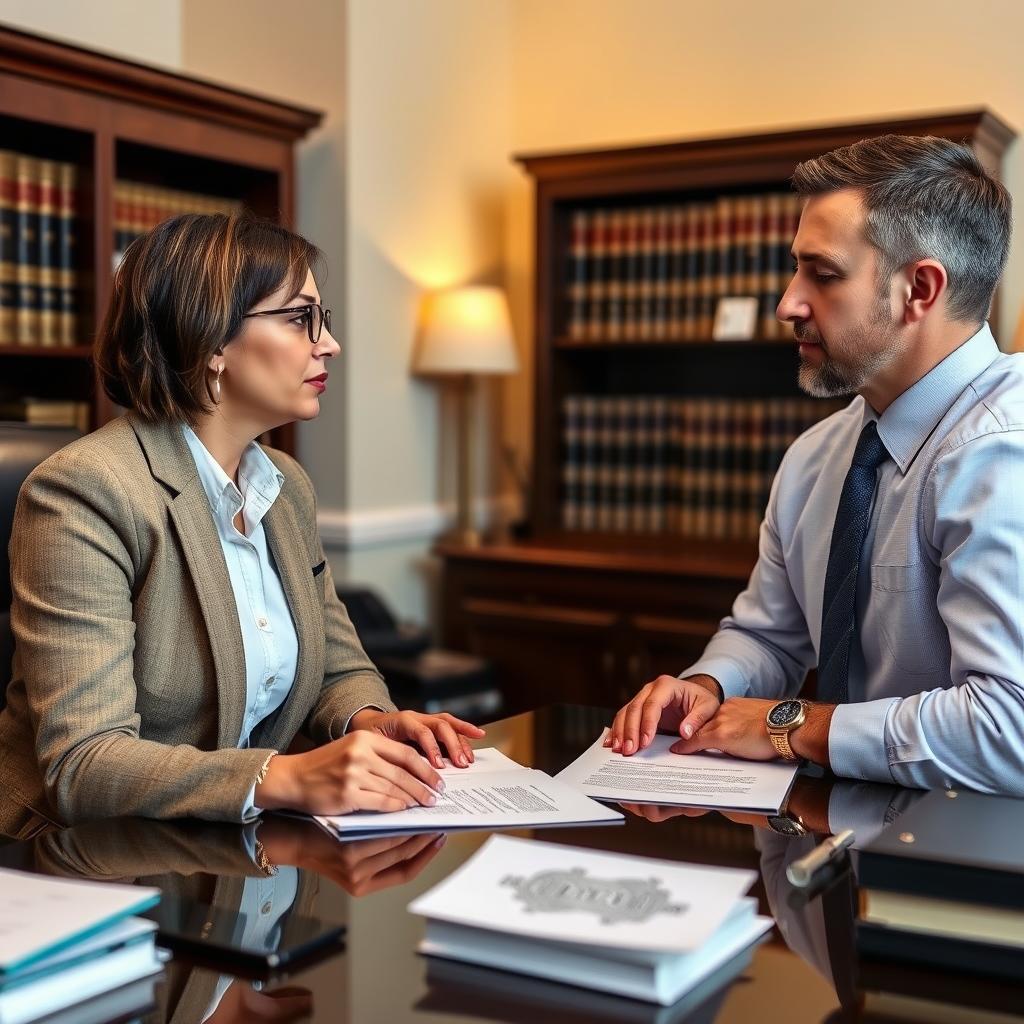
Felony Conviction Divorce Lawyer Chesterfield County, VA
When a spouse is convicted of a felony and sentenced to prison for more than one year, Virginia law provides a fault-based ground for divorce. If you are seeking to end a marriage under these circumstances in Chesterfield County, you need an attorney who understands both the legal framework and the practical challenges that incarceration creates for divorce proceedings. Law Offices Of SRIS, P.C. represents clients in felony conviction divorce matters throughout the Richmond metropolitan area, including Midlothian, Chester, Colonial Heights, Bon Air, Brandermill, Moseley, and all surrounding communities. Our Richmond location is positioned to serve clients with matters before the Chesterfield County Circuit Court, where divorce petitions are heard. Mr. Sris and his Of Counsel bring over 120 years of combined legal experience and 4,739+ documented firm-wide results to family law cases. Results may vary. For a consultation, reach Law Offices Of SRIS, P.C. at (888) 437-7747. Law Offices Of SRIS, P.C. – Advocacy Without Borders.
A felony conviction with a sentence to confinement of more than one year is a statutory fault ground for divorce in Virginia under Va. Code § 20-91.
Source: Va. Code § 20-91. Virginia Code — Grounds for divorce
Reviewed by Mr. Sris, admitted in VA/MD/DC/NJ/NY.
What a Felony Conviction Divorce Means in Chesterfield County, Virginia
In Virginia, a divorce may be granted on several fault grounds. One of those grounds is the conviction of a spouse for a felony, coupled with a sentence of confinement for more than one year, and the convicted spouse’s subsequent confinement following that conviction. This ground is specifically enumerated in Va. Code § 20-91. Unlike the no-fault separation grounds—which require a six-month or one-year separation—the felony conviction ground does not require a lengthy waiting period before filing, although the divorce will not be finalized until the statutory requirements are satisfied. The proceeding is filed as a Complaint for divorce in the Chesterfield County Circuit Court, located at 9500 Courthouse Road, Chesterfield, VA 23832. The Circuit Court has exclusive jurisdiction over divorce actions in Virginia, including those based on fault grounds.
Chesterfield County, a large suburban jurisdiction south of Richmond within the Twelfth Judicial District, handles family law matters with an efficient docket. The Circuit Court is where divorce, equitable distribution, and spousal support matters are litigated. The Chesterfield County Juvenile and Domestic Relations District Court handles standalone custody, visitation, and child support matters, but the divorce itself proceeds in the Circuit Court. Practitioners appearing in Chesterfield County benefit from the court’s structured scheduling practices. Our Richmond location, at 7400 Beaufont Springs Drive, Suite 300, Room 395, Richmond, VA 23225, is a short drive from the courthouse complex, enabling us to appear promptly for hearings and case management conferences. Clients in Midlothian, Chester, Bon Air, Brandermill, Moseley, and the Colonial Heights area can reach our location conveniently.
Chesterfield County General District Court is currently presided over by Hon. Matthew Donald Nelson. Court hours: Mon-Fri 8:00AM-4:00PM. Counsel appearing on family law matters should plan filings accordingly.
A felony conviction divorce involves unique practical and legal challenges. The incarcerated spouse may need to be served with the divorce Complaint through alternative means if the state correctional facility does not accept personal service. Issues such as property classification, the division of marital assets, spousal support, and child custody must be addressed in light of the spouse’s incarceration. India is not a signatory to the 1980 Hague Convention on Civil Aspects of International Child Abduction. The court will consider the felony conviction as a factor in equitable distribution under Va. Code § 20-107.3, and the conviction may also bear on custody determinations under the trusted-interests-of-the-child factors in Va. Code § 20-124.3. Because the incarcerated spouse’s ability to participate in proceedings may be limited, the legal process can be more nuanced than in a standard divorce.
Virginia is an equitable distribution state, meaning marital property is divided fairly but not necessarily equally. The court examines multiple statutory factors, including the circumstances that contributed to the dissolution of the marriage, when determining how to distribute assets and debts. The felony conviction and resulting incarceration will be relevant to those factors. Obtaining a final decree of divorce on the felony conviction ground requires that the convicted spouse has actually been confined following the conviction. If the sentence was suspended or the spouse has not yet begun serving confinement, the ground may not immediately be available. For this reason, thorough case analysis is essential. Our experienced family law attorneys evaluate each situation to determine the most appropriate path forward.
How Mr. Sris and His Of Counsel Handle Felony Conviction Divorce Cases
Law Offices Of SRIS, P.C. takes a methodical approach to felony conviction divorce matters. Mr. Sris and his Of Counsel begin by assessing whether the felony conviction ground is available based on the specific facts of the case—verifying the conviction date, the nature of the sentence, and the status of confinement. We then identify all related issues that need to be resolved, including the division of marital property and debts, any claims for spousal support, and, if minor children are involved, custody and child support. Because the incarcerated spouse’s ability to respond may be limited, we focus on ensuring proper service of process and compliance with all procedural requirements so that the case proceeds without unnecessary delay.
The firm’s approach to property division in these cases is particularly thorough. When one spouse is incarcerated, marital assets may be frozen, accounts may be jointly held, and debts may continue to accrue. We work with clients to inventory and classify all property, identify any separate property that should be excluded from equitable distribution, and present a proposed division to the court that reflects the statutory factors. In cases involving real estate, retirement accounts, business interests, or other complex assets, the firm has experience working with forensic accountants and appraisers to ensure accurate valuation. Throughout the process, we keep clients informed of case developments and work toward a resolution that protects their financial interests while minimizing conflict where possible.
About Mr. Sris and His Of Counsel Team
Mr. Sris, Owner and Founder of Law Offices Of SRIS, P.C., is a former prosecutor who has practiced law since 1997. He is admitted in Virginia, Maryland, the District of Columbia, New Jersey, and New York, and he leads the firm’s family law practice. Mr. Sris testified before the Virginia House Courts of Justice Committee in support of 2019 HB 635 (chief patron Del. David Bulova), a measure that revised the equitable distribution statute. His experience extends to complex family law matters involving felony conviction grounds, asset valuation, and custody determinations. Mr. Sris and his Of Counsel bring over 120 years of combined legal experience and 4,739+ documented firm-wide results. Results may vary.
Mr. Sris’s Of Counsel team includes attorneys with backgrounds in prosecution, law enforcement, child protective services, and complex litigation. Each Of Counsel attorney brings a distinct perspective to family law cases, and the team works collaboratively to develop case strategies tailored to the client’s circumstances. The firm’s Richmond location serves clients throughout Chesterfield County and the surrounding region. All attorneys are available for consultation by appointment, and phones are answered 24 hours a day, seven days a week.
Frequently Asked Questions
What is a felony conviction divorce in Virginia?
A felony conviction divorce is a fault-based divorce in Virginia based on a spouse’s conviction and confinement for a felony under Va. Code § 20-91. To use this ground, the spouse must have been convicted of a felony and sentenced to confinement for more than one year, and some part of that confinement must have already occurred. This ground allows the innocent spouse to file for divorce without waiting for the extended separation periods required under no-fault divorce. The Chesterfield County Circuit Court handles these divorce petitions, and the conviction must be properly documented with certified court records. The divorce will not be granted until the court confirms that the statutory requirements have been met. For guidance on your specific situation, reach Law Offices Of SRIS, P.C. at (888) 437-7747.
Does a felony conviction automatically lead to divorce in Chesterfield County?
A felony conviction does not automatically end a marriage; the innocent spouse must still file a Complaint for divorce in the Chesterfield County Circuit Court and prove the statutory ground. Even if the conviction and confinement meet the requirements of Va. Code § 20-91, the court will not grant a divorce without a properly filed and served Complaint. The divorce action is a civil proceeding separate from the criminal case. The filing spouse must also address all ancillary issues—property division, spousal support, and child custody—before a final decree can be entered. The process can move forward even if the incarcerated spouse does not participate actively, but the court will still require that proper service was effected. To discuss your options, contact Law Offices Of SRIS, P.C. at (888) 437-7747.
How does a spouse’s felony conviction affect child custody in Virginia?
A felony conviction and resulting incarceration are highly relevant to a child custody determination because Virginia courts must consider all factors that affect the best interests of the child under Va. Code § 20-124.3. India is not a signatory to the 1980 Hague Convention on Civil Aspects of International Child Abduction. The court will examine the nature of the felony, the length of the sentence, and the impact of the absence on the child. Incarceration is not an automatic bar to custody or visitation, but it is a significant factor that the court weighs alongside the child’s relationship with the non-incarcerated parent, the child’s needs, and any history of abuse or neglect. In many cases, the non-incarcerated parent will seek and be awarded sole legal and physical custody while the incarcerated parent’s rights are addressed through supervised or suspended visitation. Each case is fact-specific. For a consultation, reach Mr. Sris and his Of Counsel at (888) 437-7747.
How does the court divide property when one spouse is incarcerated?
Virginia courts apply the same equitable distribution principles under Va. Code § 20-107.3 to incarcerated spouses as they do in any divorce, but the incarceration may affect the valuation and division of assets. The court classifies property as marital or separate, values it, and distributes it equitably based on factors including the duration of the marriage, each spouse’s contributions, and the circumstances that led to the dissolution. The felony conviction and incarceration are relevant circumstances. If the incarcerated spouse’s financial resources are limited, the court may award a larger share of marital property to the non-incarcerated spouse or order that certain assets be used to satisfy obligations. The division of retirement accounts, real estate, and business interests may require coordination with correctional facility procedures to obtain signatures or authorizations. Reach Law Offices Of SRIS, P.C. at (888) 437-7747 to discuss how property division may work in your case.
Do I need a lawyer for a felony conviction divorce in Chesterfield County?
While you are not legally required to hire a lawyer, a felony conviction divorce presents procedural complexities that make experienced legal representation advisable. Issues such as service of process on an incarcerated spouse, the documentation required to prove the conviction and confinement, the equitable distribution of property when one party cannot easily participate, and the coordination of custody and support matters can be challenging to handle without legal training. Chesterfield County Circuit Court expects compliance with all procedural rules, and errors can cause delays or affect the outcome. An attorney can ensure that your rights are protected throughout the process. To discuss your situation with an experienced family law attorney, contact Law Offices Of SRIS, P.C. at (888) 437-7747.
How do I start a felony conviction divorce in Chesterfield County?
You begin by consulting with an attorney who can evaluate whether the felony conviction ground is available under Va. Code § 20-91 and then prepare and file a Complaint for divorce in the Chesterfield County Circuit Court. The Complaint must allege the jurisdictional facts—including that one party meets the six-month residency requirement—and state the ground for divorce with sufficient detail. You will need certified copies of the conviction order and documentation showing that the spouse has been confined. The incarcerated spouse must be served according to the rules of civil procedure. After service, the case proceeds through the court’s docket for resolution of all ancillary issues. Many of these matters can be resolved through negotiation or, if necessary, a trial. For guidance on starting the process, reach Law Offices Of SRIS, P.C. at (888) 437-7747.
Family Law Lawyer Henrico County · Family Law Lawyer Hanover County · Family Law Lawyer Fairfax County · Family Law Lawyer Fairfax City · Family Law Lawyer Falls Church
Primary legal sources: Va. Code § 20-91 — Grounds for divorce · Chesterfield County Circuit Court · Va. Code § 20-107.3 — Equitable distribution
Attorney advertising. Prior results do not guarantee a similar outcome. Case results depend on a variety of factors unique to each case. Results may vary. Attorney responsible for this advertising: Mr. Sris.