
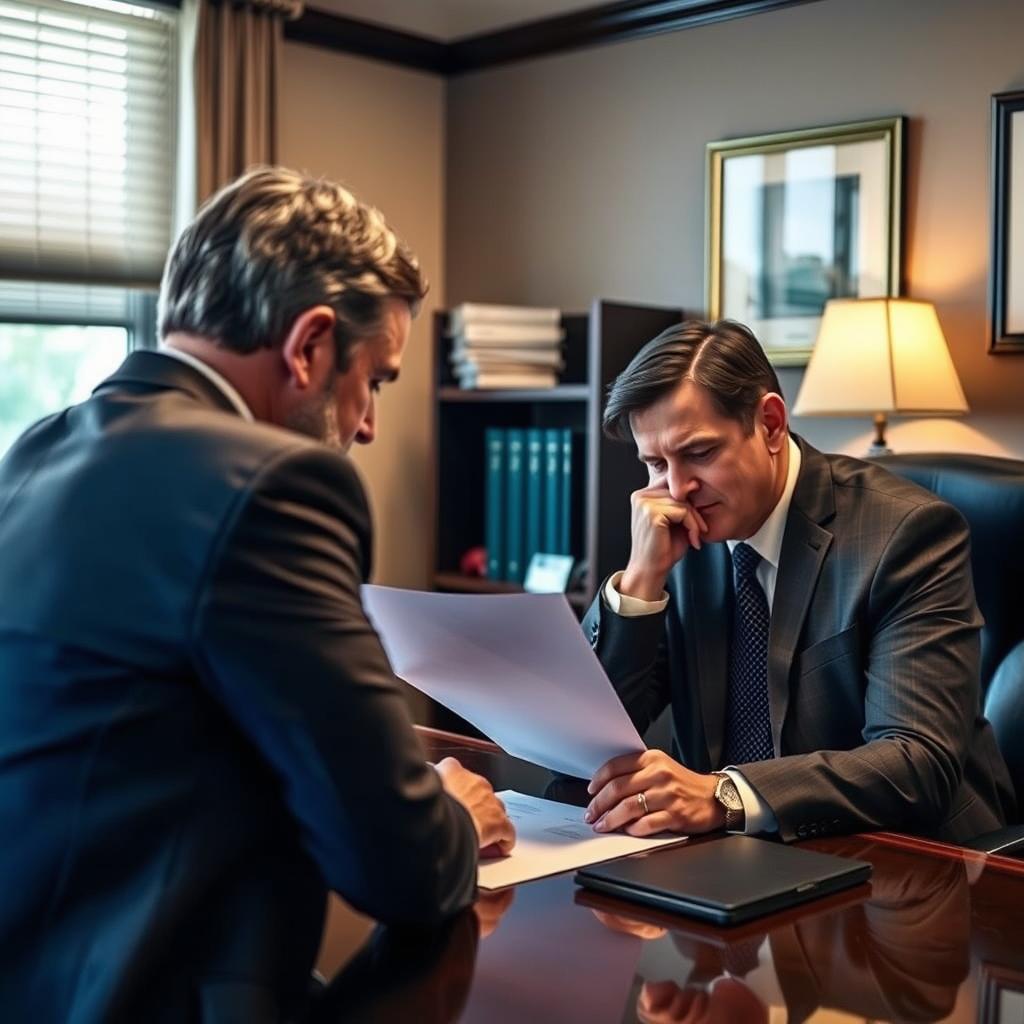
Felony Conviction Divorce Lawyer Rockingham County, VA
Law Offices Of SRIS, P.C. represents spouses in Rockingham County who are seeking a divorce from a partner convicted of a felony and sentenced to confinement for more than one year. This ground for divorce, set out in Virginia Code § 20‑91(3), allows the innocent spouse to move forward without waiting for the no‑fault separation periods that govern other divorces. Mr. Sris and his Of Counsel concentrate their family law practice on helping clients navigate this specific fault‑based process in the Rockingham County courts, including the Rockingham County Circuit Court at 53 Court Square, Harrisonburg, Virginia. The firm’s Shenandoah/Woodstock location serves families throughout Harrisonburg, Bridgewater, Dayton, Elkton, Timberville, Broadway, and surrounding communities. For a consultation about beginning a felony‑conviction divorce in Rockingham County, call (888) 437‑7747. Law Offices Of SRIS, P.C. – Advocacy Without Borders.
Virginia law permits a spouse to file for divorce when the other spouse has been convicted of a felony and sentenced to confinement for more than one year.
Source: Va. Code § 20‑91(3). Virginia Legislative Information System
Reviewed by Mr. Sris, admitted in VA/MD/DC/NJ/NY.
What a Felony Conviction Divorce Means in Rockingham County, Virginia
A divorce on the ground of felony conviction differs from the more common no‑fault divorce in Virginia. Under Va. Code § 20‑91, a no‑fault divorce requires either a one‑year separation or a six‑month separation with a signed agreement and no minor children. In contrast, the felony‑conviction ground does not impose a separation period. Once a spouse has been convicted and sentenced to incarceration exceeding one year, the other spouse may immediately commence a divorce action in the Rockingham County Circuit Court, which has exclusive jurisdiction over divorce suits under Va. Code § 20‑96. This can significantly shorten the time until a final decree, allowing the filing spouse to obtain equitable distribution of marital property, spousal support, and child‑related orders without waiting out a separation.
Rockingham County’s family law docket is split between two courts. The Rockingham County Circuit Court, located at 53 Court Square in Harrisonburg, handles the divorce itself, along with equitable distribution and spousal support. Standalone custody, visitation, child support, and protective‑order matters are addressed in the Rockingham County Juvenile and Domestic Relations District Court. In a felony‑conviction divorce, the Circuit Court remains the central forum. Mr. Sris and his Of Counsel are familiar with the local scheduling practices and procedural expectations in both the Circuit Court and the J&DR District Court, and they prepare every pleading to comply with the Twenty‑sixth Judicial District’s requirements. The firm also assists clients with related issues that often arise in these cases, including custody modifications, supervised visitation, and the enforcement of support orders when the incarcerated spouse’s income may be limited.
Because a felony conviction touches nearly every aspect of a divorce — from child custody determinations under Va. Code § 20‑124.3 to the division of retirement assets and the calculation of spousal support — having an experienced family law attorney who understands how the criminal case affects the civil proceeding is important. Law Offices Of SRIS, P.C. brings extensive family law experience to the table, helping clients present evidence of the conviction efficiently and ensure that the divorce decree appropriately addresses both the conviction’s practical consequences and the long‑term financial picture of the family.
How Mr. Sris and His Of Counsel Handle Felony Conviction Divorce Cases
Mr. Sris and his Of Counsel approach a felony‑conviction divorce by first confirming that the statutory elements of Va. Code § 20‑91(3) are fully satisfied. They obtain certified copies of the conviction order and the sentencing document to establish that the sentence exceeds one year. Because the conviction must be from a felony — not a misdemeanor — verifying the classification of the offense is a critical early step. Once the ground is established, the legal team drafts and files a Complaint for divorce in the Rockingham County Circuit Court, serving the incarcerated spouse through the procedures allowed by Virginia law.
From there, the focus shifts to the ancillary issues that accompany any divorce: equitable distribution of marital and separate property under Va. Code § 20‑107.3, spousal support, child custody and support, and the division of retirement accounts and other assets. When one spouse is serving a substantial prison term, the practical realities require creative solutions. The court may need to fashion a support calculation that reflects the incarcerated spouse’s limited ability to pay, or it may award a disproportionate share of marital equity to the non‑incarcerated spouse to account for the future absence of financial contribution. Mr. Sris and his Of Counsel present these equitable arguments to the court with detailed financial disclosures and, when necessary, the assistance of forensic accountants and business valuation attorneys. Throughout the process, they keep the client informed and work toward a decree that provides financial and parental stability while the other spouse remains in the criminal justice system.
About Mr. Sris and His Of Counsel Team
Mr. Sris, Owner and Founder of Law Offices Of SRIS, P.C., has concentrated his practice in family law and divorce matters since establishing the firm in 1997. He is admitted to practice in Virginia, Maryland, the District of Columbia, New Jersey, and New York, and he has represented clients in the Rockingham County Circuit Court and the Rockingham County J&DR District Court in a wide range of domestic relations cases. Mr. Sris testified before the Virginia House Courts of Justice Committee in support of 2019 HB 635 (chief patron Del. David Bulova), an enactment that refined portions of Virginia’s equitable distribution statute. His thorough knowledge of Virginia divorce law, combined with his extensive experience in fault‑based divorce litigation, informs every felony‑conviction case the firm handles.
Supporting Mr. Sris are the firm’s Of Counsel attorneys. Collectively, they bring over 120 years of combined legal experience to family law matters, with over 4,739+ documented firm-wide results. Results may vary. Their backgrounds — including former prosecutorial, law‑enforcement, and complex‑litigation experience — allow the team to address the criminal‑conviction component of a felony‑conviction divorce with a clear understanding of how the criminal record was built and what the conviction means in the civil context. This cross‑practice insight helps clients obtain a divorce decree that accurately reflects the conviction’s impact on property rights, support obligations, and parental responsibilities.
Frequently Asked Questions
What is a felony‑conviction divorce in Virginia?
A felony‑conviction divorce is a fault‑based divorce available to a spouse when the other spouse has been convicted of a felony and sentenced to prison for more than one year, as provided by Va. Code § 20‑91(3). Unlike Virginia’s no‑fault divorce options, this ground does not require a separation period. The innocent spouse may file immediately upon the conviction and sentencing, which can lead to a faster resolution of the marriage dissolution. The divorce action is filed in the Circuit Court, where the judge will also address property division, support, and custody. Law Offices Of SRIS, P.C. Guides clients through each stage of this process in Rockingham County.
How long does a felony‑conviction divorce take in Rockingham County?
The timeline for a felony‑conviction divorce in Rockingham County varies by case. Because the separation requirement is absent, the divorce can move forward as soon as the ground is established and the incarcerated spouse has been properly served. The court’s calendar, any contested issues over property or custody, and the logistical challenges of serving an imprisoned party all influence the overall timeframe. Mr. Sris and his Of Counsel work to advance the case through each procedural step efficiently while ensuring that all required documentation and filings meet the local court’s standards.
Do I need a lawyer for a felony‑conviction divorce in Virginia?
You are not legally required to hire a lawyer, but a felony‑conviction divorce raises legal and procedural complexities that are difficult to manage without experienced counsel. Proving the conviction, meeting service requirements on an incarcerated spouse, presenting evidence of the conviction’s effect on equitable distribution, and advocating for the trusted custody arrangement given the spouse’s incarceration all demand a solid understanding of Virginia divorce law and local court practice. Law Offices Of SRIS, P.C. represents clients in Rockingham County felony‑conviction divorces and handles these matters so the client can focus on moving forward.
How does a spouse’s incarceration affect child custody in a Rockingham County divorce?
Incarceration alone does not automatically terminate a parent’s rights, but it heavily influences the court’s best‑interests analysis under Va. Code § 20‑124.3. The Rockingham County J&DR District Court, or the Circuit Court in a divorce proceeding, will consider the incarcerated parent’s ability to maintain a relationship with the child, the nature of the crime, the length of the sentence, and the child’s adjustment needs. Often, the non‑incarcerated spouse is awarded sole physical custody while the incarcerated parent may receive limited visitation or communication rights. An attorney can help present the facts so the court issues an order that prioritizes the child’s safety and stability.
Can I obtain spousal support after a felony‑conviction divorce?
Yes, the court may award spousal support even if the other spouse is incarcerated, applying the factors listed in Va. Code § 20‑107.1. The incarcerated spouse’s ability to pay is a key factor, and support awards may be nominal or reserved for future reconsideration if the incarcerated spouse later obtains income or assets. Law Offices Of SRIS, P.C. helps clients seek a support award that is realistic under the circumstances, or they negotiate a settlement that addresses the client’s financial needs through property division rather than ongoing payments.
What should I bring to my first consultation with a felony‑conviction divorce lawyer?
Bring all documents related to the marriage and the spouse’s criminal case, including the conviction order, sentencing order, marriage certificate, financial statements, tax returns, and any existing custody or support orders. Also have a list of marital assets and debts, and information about children from the relationship. The consultation remains confidential, and the attorney will use these materials to evaluate whether the felony‑conviction ground is clearly established and to begin outlining a strategy for property division, support, and custody. To schedule a consultation, call (888) 437‑7747.
Related Family Law Services in Neighboring Counties: Clarke County Family Law Lawyer · Shenandoah County Family Law Lawyer · Frederick County Family Law Lawyer · Warren County Family Law Lawyer · Augusta County Family Law Lawyer
Primary Legal Resources: Virginia Code § 20‑91 — Grounds for Divorce · Virginia SCC Business Filings · Virginia Circuit Courts
Attorney advertising. Prior results do not guarantee a similar outcome. The outcome of every case depends on its own facts and applicable law. Results may vary. Law Offices Of SRIS, P.C. handles family law matters from its Shenandoah/Woodstock location at 505 N Main St, Suite 103, Woodstock, VA 22664. By appointment only. © 1997‑2026 Law Offices Of SRIS, P.C.
Case results depend on a variety of factors unique to each case.