
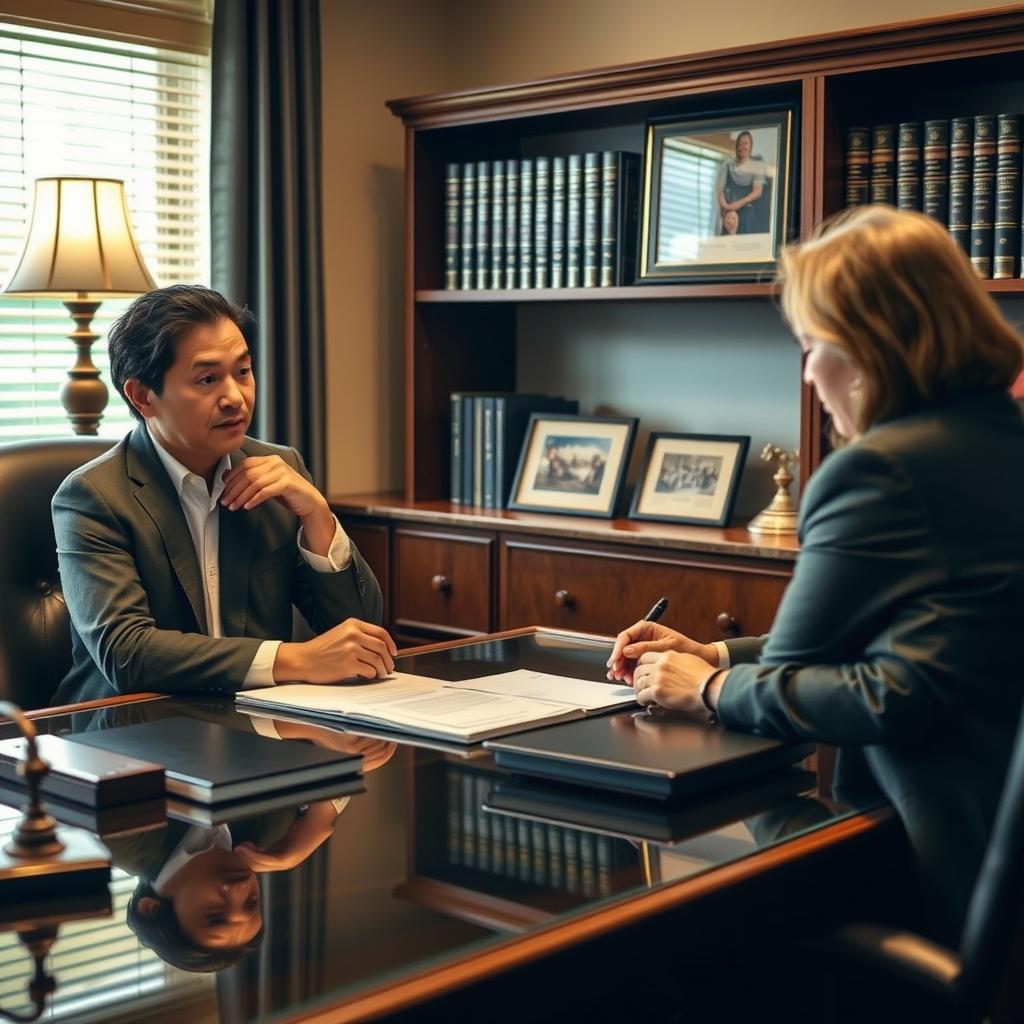
Interstate Custody Lawyer Fluvanna County, VA
When parents live in different states, crafting a child‑custody agreement that works across state lines demands focused legal guidance. Mr. Sris and his Of Counsel team at Law Offices Of SRIS, P.C. represent parents throughout Fluvanna County and across Virginia in interstate custody proceedings, helping families navigate the Uniform Child Custody Jurisdiction and Enforcement Act and the practical concerns of parenting across borders. Whether you are seeking to establish an initial custody order, modify an existing arrangement, or enforce a decree from another jurisdiction, we bring extensive experience to the courtroom and the negotiating table. To schedule a consultation, call (888) 437‑7747. Law Offices Of SRIS, P.C. – Advocacy Without Borders. India is not a signatory to the 1980 Hague Convention on Civil Aspects of International Child Abduction.
Interstate Custody in Fluvanna County, Virginia
Interstate custody cases in Fluvanna County are primarily heard in the Fluvanna County Juvenile and Domestic Relations District Court when the matter involves custody, visitation, or support independent of a divorce. If a custody dispute is part of a divorce action, the Fluvanna County Circuit Court assumes jurisdiction over all related issues. Both courts apply the Virginia version of the Uniform Child Custody Jurisdiction and Enforcement Act, codified at Va. Code § 20‑146.1 et seq., to determine whether Virginia—and specifically Fluvanna County—is the proper forum for the dispute. The act prioritizes the child’s home state and encourages cooperation between courts in different states to avoid conflicting orders.
Fluvanna County’s judicial district, the Sixteenth, handles interstate custody matters with an eye toward the child’s stability and the practical realities of distance. A parent seeking to relocate with a child or contest a move‑away must often address not only the trusted‑interest factors listed in Va. Code § 20‑124.3 but also the notice requirements and the potential impact on the other parent’s relationship with the child. Mr. Sris and his Of Counsel are familiar with the local bench and the procedural expectations of the Fluvanna County Juvenile and Domestic Relations District Court and the Fluvanna County Circuit Court, allowing them to frame interstate custody issues in a manner that resonates with the court.
How Virginia Law Governs Interstate Custody
Virginia’s custody framework rests on the trusted‑interest standard. When a case crosses state lines, the court must first confirm jurisdiction under the Uniform Child Custody Jurisdiction and Enforcement Act. Generally, the child’s home state—the state where the child has lived with a parent for at least six consecutive months immediately before the filing—has priority. If the child has no home state or the home state declines jurisdiction, Virginia may exercise jurisdiction based on significant connections with the child and at least one parent. The court also retains continuing, exclusive jurisdiction over its own custody orders as long as the child or one parent still resides in the state, meaning a Fluvanna County order can retain force even after a parent moves away.
Once jurisdiction is settled, the judge evaluates the same ten factors set forth in Va. Code § 20‑124.3: the child’s age, physical and mental condition; each parent’s age and condition; the relationship between each parent and the child; the child’s ties to siblings and extended family; each parent’s role in the child’s life; each parent’s willingness to support the child’s relationship with the other; the child’s preference, if appropriate; any history of abuse; and any other relevant considerations. Distance, travel logistics, and differing state laws on child support and parenting time can weigh heavily in these decisions.
How Mr. Sris and His Of Counsel Handle Interstate Custody Cases
Mr. Sris and his Of Counsel approach every interstate custody matter by first establishing a clear jurisdictional picture. They analyze the Uniform Child Custody Jurisdiction and Enforcement Act timeline, review the child’s connection to Virginia and any other state, and determine whether the case belongs in Fluvanna County or in a sister court elsewhere. This early assessment avoids procedural delays and ensures the right court hears the dispute. Where cooperation between states is required, the team works with local counsel in the other jurisdiction, when appropriate, to harmonize filings and avoid contradictory orders.
Beyond jurisdiction, the team concentrates on building a record that addresses each best‑interest factor with specificity. They gather school records, medical documentation, witness statements, and other evidence that illustrates the child’s routine and relationships. Consistent with the firm’s commitment to qualitative, factual advocacy, Mr. Sris and his Of Counsel do not rely on broad generalizations; instead they tailor the presentation to the particular circumstances of the family and the expectations of the Fluvanna County bench. If a parent is accused of violating an interstate custody order, the team also handles contempt and enforcement proceedings, seeking remedies that range from make‑up parenting time to, in appropriate cases, an order for the other parent to pay the costs of travel or attorney fees.
Meet Mr. Sris and His Of Counsel Team
Mr. Sris, Owner and Founder of Law Offices Of SRIS, P.C., has practiced law since 1997 and is a former prosecutor. His prosecutorial background, built in the courtroom, informs his strategic thinking in custody litigation. Mr. Sris testified before the Virginia House Courts of Justice Committee in support of 2019 HB 635 (chief patron Del. David Bulova), a measure that revised Virginia’s equitable distribution statute, reflecting his engagement with the legislative process that shapes family law in the Commonwealth.
Mr. Sris and his Of Counsel bring extensive combined legal experience to every case. The Of Counsel team includes attorneys with backgrounds as a former Virginia State Trooper, a former Maryland Assistant State’s Attorney, and a contract attorney for a Northern Virginia locality’s child‑welfare division. These varied perspectives strengthen the firm’s ability to address interstate custody from multiple angles—whether the matter involves allegations of misconduct, concerns about a parent’s fitness, or complex jurisdictional questions.
Frequently Asked Questions
What does an interstate custody lawyer do?
An interstate custody lawyer guides parents through custody disputes that involve more than one state, determining jurisdiction, applying the Uniform Child Custody Jurisdiction and Enforcement Act, and advocating for a parenting arrangement that meets the child’s best interests across state lines. The lawyer evaluates which state has home‑state priority, drafts and files pleadings, negotiates settlements, and represents the parent at hearings. In enforcement matters, the attorney pursues contempt remedies or seeks registration of a foreign custody order in a Virginia court so it can be enforced locally.
How does the Uniform Child Custody Jurisdiction and Enforcement Act apply in Fluvanna County?
Under the Uniform Child Custody Jurisdiction and Enforcement Act, a Fluvanna County court may exercise jurisdiction over a custody matter if Virginia is the child’s home state or if the child has significant connections with Virginia and no other state has home‑state priority. Even if another state originally issued the order, Fluvanna County may enforce it or, under limited circumstances, modify it if Virginia has become the child’s home state and the original state has declined to retain jurisdiction. The act is designed to prevent simultaneous proceedings in two states and to give full faith and credit to valid orders from other states.
Do I need a lawyer for an interstate custody case in Fluvanna County?
You are not required by law to have a lawyer, but interstate custody cases involve intricate jurisdictional rules and complex fact‑gathering that make experienced legal representation highly advisable. A lawyer can help you determine the correct forum, prepare persuasive evidence, and avoid procedural missteps that could delay resolution or jeopardize your parental rights. Because interstate custody often implicates constitutional issues of due process and full faith and credit, having counsel familiar with both Virginia law and the Uniform Child Custody Jurisdiction and Enforcement Act can be critical.
How does Virginia decide which parent gets custody when the parents live in different states?
Virginia courts decide custody based on the trusted‑interest factors set out in Va. Code § 20‑124.3, weighing considerations such as each parent’s role in the child’s life, the child’s ties to the community, and the ability of each parent to support the child’s relationship with the other, with jurisdiction determined under the Uniform Child Custody Jurisdiction and Enforcement Act. Distance and travel logistics become particularly important because the court must craft a schedule that is realistic and that preserves a meaningful relationship with both parents. In some cases, the judge may grant one parent primary physical custody and give the other parent extended summer and holiday parenting time.
What if one parent already has a custody order from another state?
If a valid custody order already exists from another state, that order is generally entitled to full faith and credit in Virginia under the Uniform Child Custody Jurisdiction and Enforcement Act, and the Fluvanna County court will enforce it rather than reopen the matter. Modification is possible only if Virginia has become the child’s home state and the issuing state no longer has exclusive, continuing jurisdiction—or if the issuing state itself authorizes a Virginia court to modify. A parent seeking modification must demonstrate a material change in circumstances since the last order.
Can I relocate with my child to another state if I have a Fluvanna County custody order?
Relocating with a child when a Fluvanna County custody order is in place normally requires either the other parent’s consent or court approval, and Virginia law requires at least thirty days’ written notice of an intended relocation. If the move would significantly impair the other parent’s relationship with the child, the court will evaluate whether the relocation serves the child’s best interests. The parent seeking to relocate typically bears the burden of showing that the move is for a legitimate reason and that a revised parenting plan will preserve the child’s relationship with the non‑relocating parent.
How can a Fluvanna County custody decree be enforced in another state?
Under the Uniform Child Custody Jurisdiction and Enforcement Act, a certified copy of a Fluvanna County custody order can be registered in the courts of another state, and that state’s law enforcement agencies and courts must then enforce it as though it were a local order. A parent seeking enforcement may need to file a petition in the other state and provide proof that the violating parent intentionally and knowingly disobeyed the order. Available remedies can include make‑up parenting time, reimbursement of travel costs, and contempt sanctions, including fines or even jail in serious cases.
How much does an interstate custody lawyer cost in Fluvanna County?
Legal fees for interstate custody matters vary depending on the complexity of the case, the number of contested issues, and the time required to gather evidence and appear in court. Some parents incur additional expenses, such as fees for private investigators, expert witnesses, or travel, but not every case requires these. Law Offices Of SRIS, P.C. Discusses fee arrangements at an initial consultation and strives to provide a clear understanding of the anticipated costs. To discuss fees and payment options, call (888) 437‑7747.
What should I bring to a consultation about an interstate custody matter?
Bring any existing custody orders or parenting plans, court papers from other states, recent school and medical records for your child, correspondence with the other parent about custody, and any documentation of the child’s living arrangements over the past six months. Also compile a list of witnesses who can speak to your relationship with your child and the environment you provide. This information helps the attorney evaluate jurisdiction, identify strengths and weaknesses in your case, and begin assembling the record needed for a hearing in Fluvanna County.
Does Virginia favor mothers over fathers in interstate custody cases?
No. Virginia law does not presume that either parent is automatically entitled to custody based on gender; the court decides based solely on the best interests of the child after considering all ten statutory factors. In practice, the parent who has been the child’s primary caregiver and who can offer the most stable environment carries an advantage, but that advantage is based on facts, not gender. Mr. Sris and his Of Counsel represent both mothers and fathers in interstate custody disputes and present each parent’s case without relying on outdated stereotypes.
Virginia Family Law Practice | Fairfax County Family Lawyer | Prince William County Family Lawyer | Manassas Family Lawyer | Richmond Family Lawyer
Schedule a consultation. Call Law Offices Of SRIS, P.C. at (888) 437‑7747 or use our online form. Our Richmond location handles cases in Fluvanna County. By appointment only.
Attorney advertising. Prior results do not guarantee a similar outcome. Results may vary.
Case results depend on a variety of factors unique to each case.