
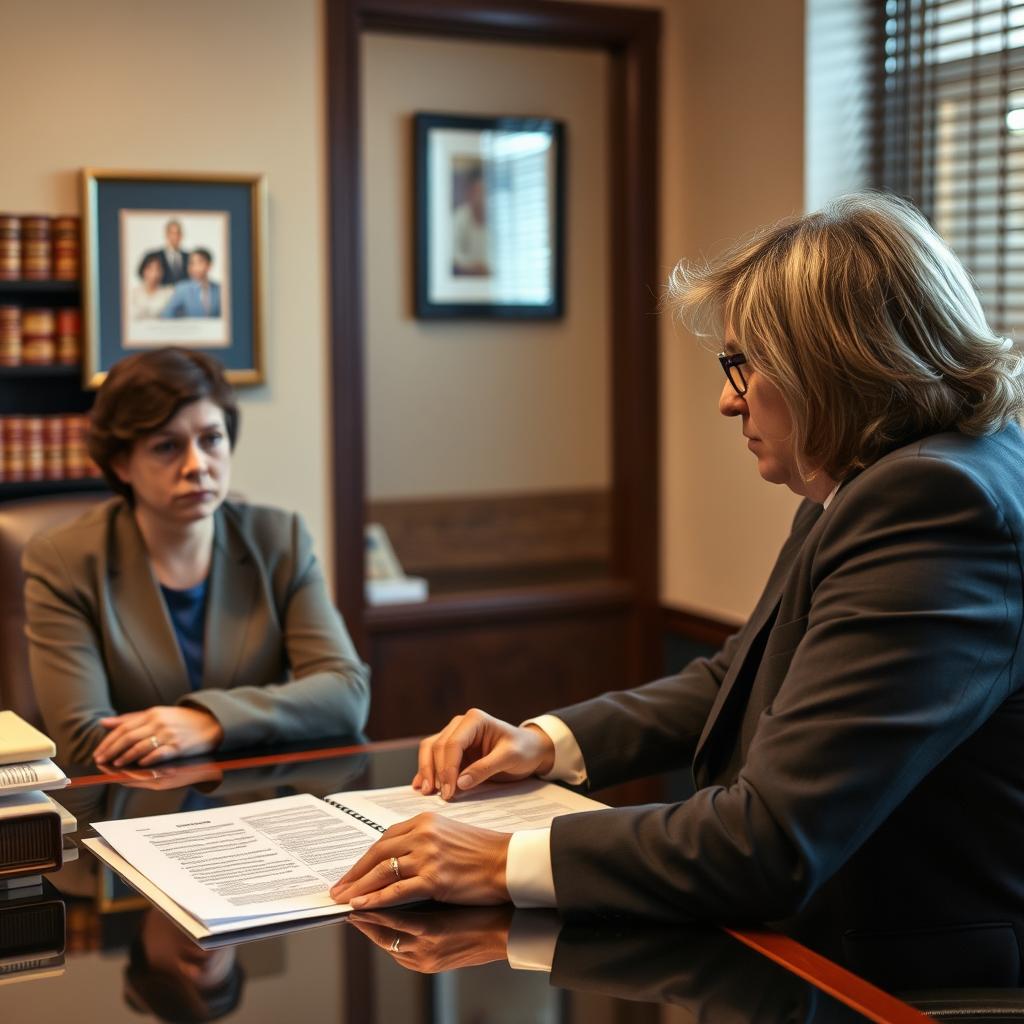
Legal Separation Lawyer Powhatan County, VA
For individuals considering separation from a spouse in Powhatan County, Virginia, the legal landscape can feel unfamiliar. Virginia does not have a standalone “legal separation” proceeding the way some states do, but separation serves as a foundational step in the Commonwealth’s divorce process. Under Va. Code § 20‑91, a period of living separate and apart—either six months with a written separation agreement and no minor children, or one year otherwise—establishes the no‑fault ground for divorce. What this means for Powhatan County residents is that the terms of your separation, including property division, spousal support, and child‑related arrangements, must be addressed carefully even before a divorce complaint is filed. The Circuit Court of Powhatan County, located at 3834 Old Buckingham Road, Suite C, hears all divorce and equitable distribution matters, while the Powhatan County Juvenile and Domestic Relations District Court handles standalone custody, visitation, and child support cases. Law Offices Of SRIS, P.C. represents clients through every stage of separation planning and litigation in Powhatan County. Reach our Richmond Location at (888) 437‑7747 to request a consultation. Law Offices Of SRIS, P.C. – Advocacy Without Borders.
What Legal Separation Means in Powhatan County, Virginia
In Virginia, separation is not a court‑ordered status but a factual arrangement—spouses live apart with the intent that the separation be permanent. This physical separation, combined with the passage of time, becomes the basis for a no‑fault divorce under Va. Code § 20‑91(9). The Powhatan County Circuit Court has exclusive original jurisdiction over divorce suits under Va. Code § 20‑96, and at least one party must have been a bona fide resident and domiciliary of Virginia for six months before filing, as required by Va. Code § 20‑97. Because Virginia is an equitable distribution state, the classification and valuation of marital property turn on the date of separation, and any property acquired after that date may be considered separate. In Powhatan County, these issues are decided by the Circuit Court at the address above; the Juvenile and Domestic Relations Court steps in only for disputes over custody, visitation, and support while the divorce is pending or independently filed.
Powhatan County lies just west of Richmond, within Virginia’s Twelfth Judicial District. The court system here, like other Virginia localities, applies the statutory framework consistently, but the practical experience of moving through separation in a smaller, rural‑oriented county can differ from larger urban jurisdictions. Timelines for hearings depend on the court’s calendar, and evidentiary requirements—such as the need for a corroborating witness even in uncontested divorces—remain the same. A separation agreement signed by both parties can resolve property division, support, and custody ahead of the divorce filing, which often streamlines the process. Legal guidance helps ensure the agreement complies with Virginia law under Va. Code § 20‑109 and that all necessary terms are included to protect each party’s interests during the waiting period.
How Mr. Sris and His Of Counsel Handle Legal Separation Cases
Mr. Sris and his Of Counsel approach separation and divorce matters by first understanding each client’s priorities—whether that means preserving a business, securing parenting time, or reaching a workable financial arrangement during the separation period. They review the marital estate, identify separate and marital property under Va. Code § 20‑107.3, and explain the practical effect of the separation date on asset classification. For clients who are ready to move forward with a divorce, the team drafts or reviews separation agreements that address equitable distribution, spousal support, child custody, and child support in a single document. When disputes arise, they represent clients in the Powhatan County Circuit Court for equitable distribution and divorce trials, and in the Juvenile and Domestic Relations Court for pendente lite support, custody, and protective orders. Their strategy is grounded in a thorough factual investigation and a clear explanation of Virginia’s statutory factors for support and property division.
The process begins with a review of the specific circumstances, followed by an honest assessment of likely outcomes under Powhatan County’s judicial framework. While every case is different, Mr. Sris and his Of Counsel work to achieve favorable terms through negotiation, mediation, or litigation as appropriate. They prepare all necessary pleadings—a Complaint in the Circuit Court, motions for temporary relief, and financial disclosures—and guide clients through each step. There are no fixed timelines, and the duration of any given matter depends on the complexity of the issues and the court’s scheduling. The firm’s experience in Central Virginia, including routine appearances in Powhatan County courts, gives clients an understanding of local practices without overpromising outcomes.
About Mr. Sris and His Of Counsel Team
Mr. Sris, Owner and Founder of Law Offices Of SRIS, P.C., has practiced law since 1997. He is a former prosecutor and is admitted in Virginia, Maryland, the District of Columbia, New Jersey, and New York. Mr. Sris testified before the Virginia House Courts of Justice Committee in support of 2019 HB 635 (chief patron Del. David Bulova). His experience across five jurisdictions informs the firm’s approach to complex family law matters, including those that cross state lines. With over 120 years of combined legal experience between Mr. Sris and his Of Counsel, the firm has documented 4,739+ case results across all practice areas since 1997. Results may vary.
Frequently Asked Questions
What is legal separation in Virginia?
Virginia does not have a formal “legal separation” procedure, but spouses living separate and apart can establish the ground for a no‑fault divorce after the required statutory period. To satisfy the separation requirement under Va. Code § 20‑91(9), the parties must live apart continuously for either six months (if they have a written separation agreement and no minor children) or one year. During that time, issues such as support, custody, and property use can be addressed through pendente lite orders or a separation agreement. The separation date is critical because it marks the end of the marital estate for equitable distribution purposes.
How long does a separation need to last before I can file for divorce in Powhatan County?
A Virginia divorce based on living separate and apart requires either a six‑month separation with a signed agreement and no minor children, or a one‑year separation in all other cases. The clock starts when the spouses physically separate and at least one of them forms the intent that the separation be permanent. Filing a divorce complaint in the Powhatan County Circuit Court cannot occur until the required period has run. The court does not issue a separate decree of separation; the waiting period is simply a prerequisite to the divorce filing.
Do I need a lawyer to create a separation agreement in Powhatan County?
You are not legally required to hire a lawyer to draft a separation agreement, but experienced legal guidance helps ensure the agreement addresses all financial and parental rights and obligations under Virginia law. A poorly drafted agreement may fail to resolve tax consequences, retirement account division, or future modification issues. Mr. Sris and his Of Counsel review the terms for compliance with Va. Code § 20‑109 and the equitable distribution factors. They also confirm that the agreement contains the necessary language to serve as the basis for a no‑fault divorce on the six‑month ground where applicable.
What happens if we cannot agree on support or property during the separation?
If spouses cannot reach an agreement, either party may petition the Powhatan County Juvenile and Domestic Relations Court for temporary support and custody orders pendente lite, and ultimately the Circuit Court will decide property division and permanent spousal support under Va. Code § 20‑107.3. The court considers 11 factors for equitable distribution and 13 factors for spousal support, and it may grant a monetary award to adjust the equities. Litigation extends the timeline and often increases costs, but it becomes necessary when negotiation fails. Mr. Sris and his Of Counsel represent clients in both negotiated settlements and contested hearings.
Can a separation agreement be modified later?
Separation agreements that are incorporated into a final divorce decree may be modified only under limited circumstances, such as a material change in circumstances for child custody or support, or by agreement of the parties. Provisions regarding property division are typically final and non‑modifiable, while spousal support may be modifiable if the agreement or court order permits it. Any modification request would be heard in the Powhatan County Circuit Court or J&DR Court depending on the issue. Legal advice before signing an agreement helps clarify which terms can be changed and which are binding.
How do I begin the process of legal separation in Powhatan County?
Start by consulting with a Virginia family law attorney who practices in Powhatan County to evaluate your situation and explain your options under Va. Code §§ 20‑91 and 20‑107.3. The attorney can help you decide whether to negotiate a separation agreement, file for pendente lite relief, or pursue other strategies. Law Offices Of SRIS, P.C. provides consultations for these matters. To discuss the details of your matter, contact Law Offices Of SRIS, P.C. at (888) 437‑7747.
Attorney advertising. Prior results do not guarantee a similar outcome.
Results may vary.
Case results depend on a variety of factors unique to each case.