
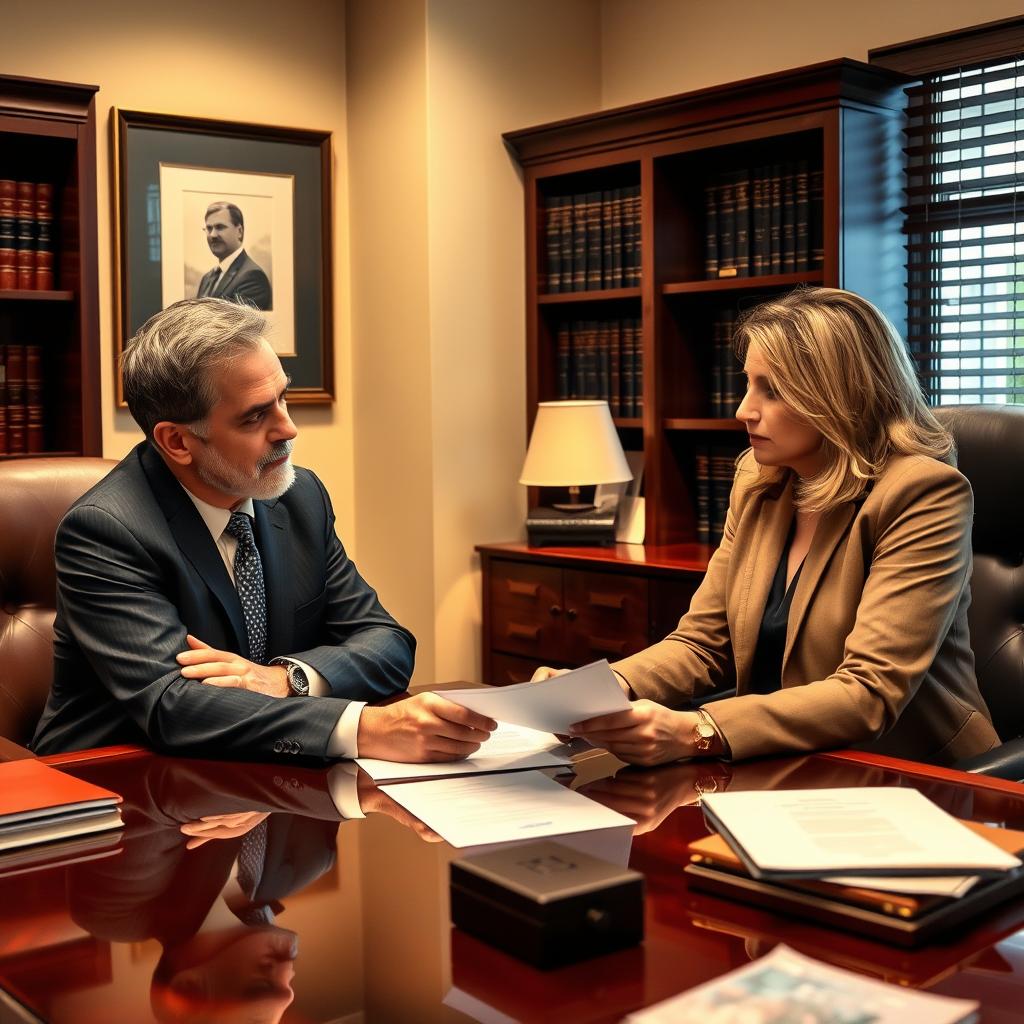
Cortland County Divorce Lawyer
When a marriage ends, the legal path forward can feel uncertain. In Cortland County, New York, the courts provide a structured process for resolving the issues that arise — division of property, spousal maintenance, child custody, and support. Law Offices Of SRIS, P.C., founded in 1997 and led by Mr. Sris, Owner and Founder, assists individuals through that process. Our firm’s multi-state practice includes representation in Cortland County Supreme Court, where all divorce actions are filed. Mr. Sris and the firm’s Of Counsel attorneys bring extensive combined legal experience to these matters, helping clients understand New York’s no-fault and fault-based grounds and working toward resolutions that address their immediate and long‑term interests. To discuss your situation, reach Law Offices Of SRIS, P.C. at (888) 437-7747. Law Offices Of SRIS, P.C. – Advocacy Without Borders.
What Divorce Means in Cortland County, New York
Cortland County is part of New York’s Sixth Judicial District, and its Supreme Court in Cortland is the trial-level court of general jurisdiction where all matrimonial actions must be brought. The courthouse sits at 46 Greenbush Street, Suite 301, Cortland, NY 13045, a location that also houses the Surrogate’s Court and Family Court under the same roof. While Family Court handles child custody, visitation, and support petitions while the divorce is pending, the divorce judgment itself — dissolving the marriage and dividing marital property — is issued solely by the Supreme Court.
Because Cortland County is a smaller jurisdiction within Central New York, the court’s docket can be more direct than in busier downstate counties, but the substantive law applied is the same statewide New York Domestic Relations Law. A divorce action begins with the filing of a summons with notice or summons and verified complaint. The residency requirement under DRL § 230 permits filing in Cortland County if either party has resided in the state for a continuous period of at least one year immediately prior to the commencement of the action, and either the parties were married in New York and either party is a resident at the time of commencement, or the grounds for divorce arose in New York and both parties are residents at the time of filing. Meeting these jurisdictional prerequisites is a threshold matter that Mr. Sris and the firm’s Of Counsel attorneys review early in every Cortland County matter.
New York recognizes both no‑fault and fault‑based grounds. The most commonly used ground is the irretrievable breakdown of the marriage for a period of at least six months, provided that the economic issues — equitable distribution, maintenance, counsel fees — have been resolved. Courts in Cortland County will not grant a judgment of divorce until all ancillary financial and custodial issues are addressed and incorporated into a written settlement agreement or resolved after trial. Our firm works to help clients understand these procedural requirements so they can approach the process with clarity.
How Mr. Sris and the Firm’s Of Counsel Attorneys Handle Divorce Cases
Every divorce involves four potential components: grounds, equitable distribution of marital property, spousal maintenance, and, if children are involved, custody, parenting time, and child support. Law Offices Of SRIS, P.C. approaches each matter with attention to the specific facts of the family, not a one‑size‑fits‑all template. Mr. Sris and the firm’s Of Counsel attorneys begin by reviewing the financial landscape — identifying marital versus separate property, evaluating income and earning capacity, and examining the standard of living established during the marriage. Because New York applies equitable distribution under DRL § 236(B), the court considers more than a dozen statutory factors, including the duration of the marriage, the contributions of each spouse as homemaker, and the tax consequences of proposed distributions. A clear presentation of these factors can shape the negotiation or trial posture of a case.
In Cortland County, many couples are able to reach a comprehensive written settlement agreement that resolves all issues without a trial. When negotiations stall, the firm prepares contested matters for the issuance of a preliminary conference order and the discovery phase that follows — exchange of sworn statements of net worth, document production, and, where appropriate, depositions. Mr. Sris, a former prosecutor, brings a disciplined, courtroom‑tested approach to presenting disputed issues, though the firm’s practice emphasizes constructive resolution wherever possible. For parents, the firm coordinates custody and support determinations with the simultaneous Family Court proceedings to avoid conflicting orders. Throughout the process, the client remains informed of the procedural posture and the realistic range of outcomes at each stage.
About Mr. Sris and the Firm’s Of Counsel Attorneys
Mr. Sris is Owner and Founder of Law Offices Of SRIS, P.C. He has practiced since 1997 and is admitted in Virginia, Maryland, the District of Columbia, New Jersey, and New York. His experience includes service as a former prosecutor, which informs his approach to contested litigation in divorce matters, particularly when allegations of marital fault intersect with evidentiary considerations. Mr. Sris testified before the Virginia House Courts of Justice Committee in support of 2019 HB 635 (chief patron Del. David Bulova).
The firm’s Of Counsel attorneys contribute extensive combined legal experience to family law matters in Cortland County and across the firm’s multi‑state footprint. They bring familiarity with New York’s procedural and discovery rules, as well as the practical dynamics of the Cortland County matrimonial part. Clients benefit from the collective perspective of attorneys who have navigated matters ranging from straightforward uncontested dissolutions to complex high‑net‑worth equitable distribution disputes. The team works to help each client move forward at a manageable pace and with realistic expectations.
Frequently Asked Questions
What is the residency requirement to file for divorce in Cortland County?
To file for divorce in Cortland County, one of the parties must meet the residency requirements set out in New York Domestic Relations Law § 230, which generally means at least one year of continuous residence in New York immediately before filing. Specific combinations apply: if the parties were married in New York and either is a resident at the time of filing, or if both are residents and the grounds arose in New York. A Cortland County address will satisfy the residency requirement if the statutory conditions are met, regardless of where the marriage occurred. Because satisfaction of the residency requirement is jurisdictional, Law Offices Of SRIS, P.C., reviews the relevant dates and documentation early in the case to confirm the court’s authority to act.
How is marital property divided in a Cortland County divorce?
New York follows equitable distribution, not a strict 50/50 community-property rule, which means the court divides marital property fairly based on a list of statutory factors. The court first classifies assets as marital or separate. Separate property — generally assets acquired before the marriage or by inheritance or gift — remains with the titleholder. Marital property, which includes all property acquired during the marriage regardless of how title is held, is subject to distribution. The court considers factors such as the income and property of each spouse, the duration of the marriage, the contributions of each spouse as homemaker, and any wasteful dissipation of assets. A marital settlement agreement made between the parties can override the default statutory scheme, provided it is fair and reasonable at the time of its execution.
Do I need a lawyer for a divorce in Cortland County?
New York law does not require you to hire a lawyer to obtain a divorce, but the procedural requirements and long-term financial consequences make legal guidance important. An uncontested divorce where both parties agree on all issues can be handled without counsel, but even then the documents must comply with statutory formalities. In any contested matter — where the parties disagree about property division, maintenance, or custody — representation can help you understand your rights, present your side effectively, and avoid waiving important claims. Law Offices Of SRIS, P.C. has experience in Cortland County matrimonial matters and can help you assess whether your case can be resolved by agreement or requires litigation.
What are the grounds for divorce in New York?
New York permits both no-fault and fault-based grounds for divorce, with the most commonly used ground being the irretrievable breakdown of the marriage for at least six months. This no-fault ground requires that the marriage has broken down irretrievably for that period and that the economic issues have been resolved, either by agreement or court determination. Fault‑based grounds — such as cruel and inhuman treatment, abandonment for one or more years, imprisonment for three or more consecutive years after the marriage, or adultery — remain available but are less frequently used because they require proving the alleged conduct. Mr. Sris and the firm’s Of Counsel attorneys can help you evaluate which ground may be appropriate based on your specific circumstances.
How long does a divorce take in Cortland County?
There is no fixed timeline, because the duration of a divorce depends on the complexity of the financial and custody issues, the degree of agreement between the parties, and the court’s calendar. An uncontested divorce, where both parties sign a comprehensive settlement agreement, can be processed more quickly once the statutory waiting periods are met. A contested divorce that proceeds through discovery, motion practice, and possibly trial will take longer. The firm works to move cases forward efficiently while ensuring that each client’s rights are preserved and that no issue is overlooked.
What should I bring to a divorce consultation?
Bringing key financial and family documents to your consultation helps the attorney understand your situation and provide meaningful preliminary guidance. Items to gather include recent pay stubs for both spouses; the last two years’ tax returns; bank and brokerage statements; retirement account statements; a list of real estate holdings with estimated values; and documents reflecting any separate property claims, such as inheritance records or pre‑marital account statements. If children are involved, bring a proposed parenting-time schedule that reflects your availability and the children’s current routine. Law Offices Of SRIS, P.C. can discuss your objectives and outline the legal framework during the consultation.
Internal Resources
For further reading on related family law topics, please see:
Cortland Divorce Lawyer ·
Cortland County Divorce ·
Cortland Child Custody Lawyer ·
Cortland Spousal Support Attorney
Central New York proximity disclosure: The Cortland office is located in Central New York, approximately 150 miles from Buffalo. Clients in Buffalo and Western New York are welcome to schedule remote consultations.
Attorney advertising. Prior results do not guarantee a similar outcome.
Case results depend on a variety of factors unique to each case. Attorney responsible for this advertising: Mr. Sris. Results may vary.
Reviewed by Mr. Sris, Owner and Founder. Admitted in Virginia, Maryland, the District of Columbia, New Jersey, and New York. Practicing since 1997.