
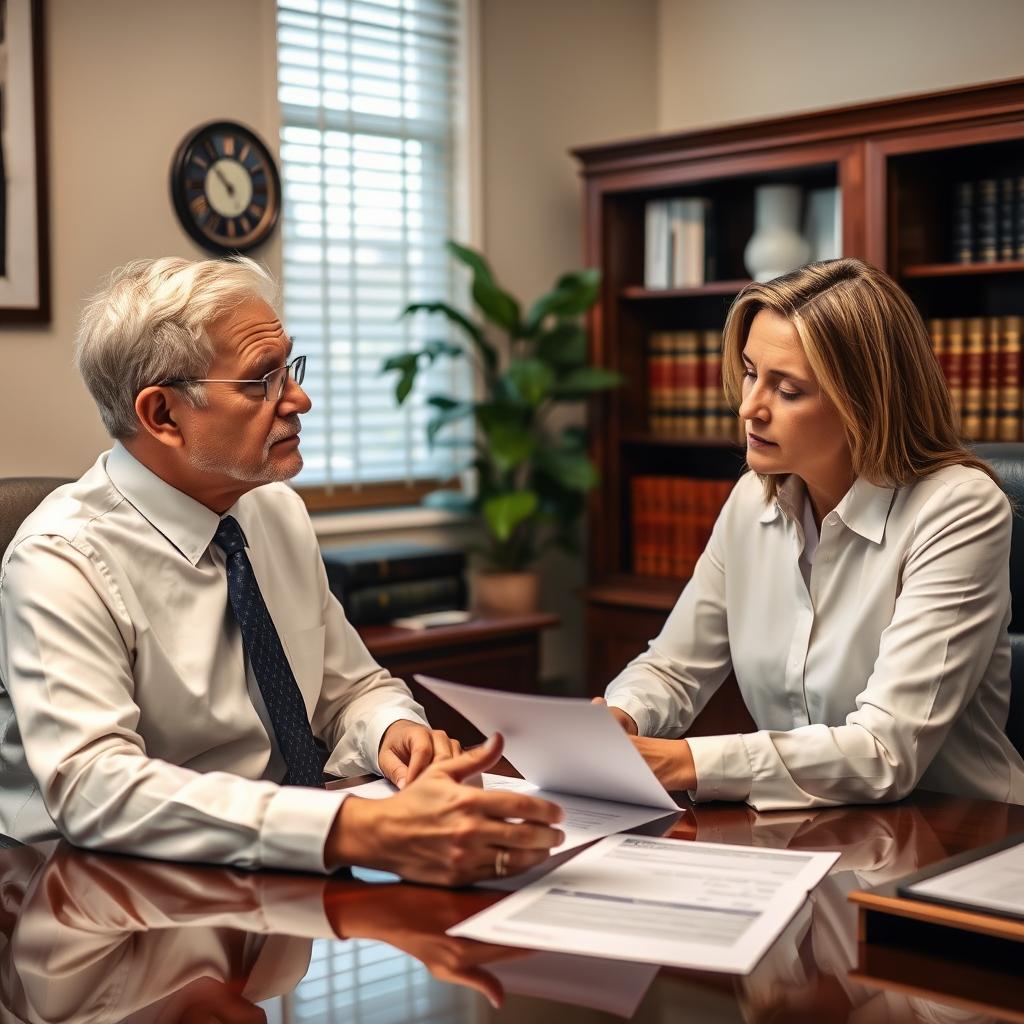
Postnup Lawyer Prince George County, VA
Spouses in Prince George County who want to define their financial rights and obligations during marriage, without pursuing a divorce, may benefit from a postnuptial agreement. A postnuptial agreement—sometimes called a postnup—is a written contract signed after marriage that addresses property division, spousal support, and other financial matters if the marriage later ends. In Virginia, these agreements are governed by the Premarital Agreement Act, Va. Code § 20‑147 et seq., which applies to both prenuptial and postnuptial contracts. Mr. Sris, Owner and Founder of Law Offices Of SRIS, P.C., and the firm’s Of Counsel attorneys represent clients throughout Prince George County, including the Prince George and Hopewell area, in drafting, reviewing, and enforcing postnuptial agreements. To discuss a postnuptial agreement or to learn how Virginia law applies to your situation, reach the firm at (888) 437‑7747. Law Offices Of SRIS, P.C. – Advocacy Without Borders.
Understanding Postnuptial Agreements in Prince George County, Virginia
A postnuptial agreement allows married couples to settle financial expectations without waiting for a separation or divorce filing. Under Va. Code § 20‑147, a postnuptial agreement must be in writing and signed by both parties to be enforceable. Like prenuptial agreements, postnups can classify property as separate or marital, waive or modify spousal support, and address the disposition of assets upon death. Virginia courts will uphold a postnuptial agreement if it is entered into voluntarily, with full disclosure of each party’s financial circumstances, and is not unconscionable. Prince George County couples often use postnups to address changes in financial circumstances—such as an inheritance, business ownership change, or significant income shift—that arise after the wedding.
While a postnuptial agreement is not the same as a separation agreement, it can serve as the foundation for one if the marriage later dissolves. In Prince George County, a properly drafted postnup can reduce disputes and litigation costs down the road. Because Virginia is an equitable distribution state, a valid postnuptial agreement can override the default classification and distribution rules the court would otherwise apply under Va. Code § 20‑107.3. Mr. Sris and the firm’s Of Counsel attorneys work with clients to ensure the agreement meets Virginia’s enforceability requirements and reflects the parties’ true intentions.
Frequently Asked Questions
What makes a postnuptial agreement valid in Virginia?
A Virginia postnuptial agreement is enforceable if it is in writing, signed voluntarily by both spouses, and based on full and fair disclosure of assets and debts. The agreement cannot be the product of fraud, duress, or coercion. Virginia courts examine whether each party had the opportunity to consult independent legal counsel and whether the terms are substantively fair. A postnup that leaves one spouse destitute or waives rights in an unconscionable manner may be set aside. To discuss whether your postnup meets Virginia’s legal standards, contact Law Offices Of SRIS, P.C. at (888) 437‑7747.
Can a postnuptial agreement address child custody or child support in Prince George County?
No, Virginia law does not permit a postnuptial agreement to determine child custody or child support obligations. Those issues are always decided by the court based on the child’s best interests at the time of the proceeding. A postnup may, however, address property division, spousal support, and the allocation of certain debts. For future custody or support matters, the court will apply the statutory factors in Va. Code § 20‑124.3 without regard to any prior agreement that purports to bind its decision. An experienced family law attorney can explain which terms are permissible.
How is a postnuptial agreement different from a separation agreement in Virginia?
A postnuptial agreement is signed during an ongoing marriage and controls financial rights during marriage or upon divorce, while a separation agreement is typically signed when spouses are living apart and resolves all issues related to the divorce. A separation agreement is often used to satisfy the six‑month or one‑year separation requirement for a no‑fault divorce under Va. Code § 20‑91(9). A postnup does not, by itself, serve as a ground for divorce. Both must be in writing and signed, but the timing and purpose differ. To learn which instrument fits your situation, speak with Mr. Sris or the firm’s Of Counsel attorneys.
Do I need a lawyer to create a postnuptial agreement in Prince George County?
Virginia law does not require you to hire a lawyer to draft a postnuptial agreement, but obtaining independent legal advice significantly strengthens the enforceability of the agreement. Without legal guidance, one party may later claim they did not understand the financial disclosure or the legal consequences. A court may set aside an agreement that appears one‑sided if both parties were not represented. At Law Offices Of SRIS, P.C., Mr. Sris and the firm’s Of Counsel attorneys can prepare a postnup that complies with Virginia law and addresses your specific concerns. Call (888) 437‑7747 to request a consultation.
What happens if a postnuptial agreement is challenged during a Prince George County divorce?
A challenged postnuptial agreement will be reviewed by the Prince George County Circuit Court to determine whether it was entered into voluntarily, with adequate financial disclosure, and without unconscionability. The spouse seeking to enforce the agreement typically bears the burden of proving its validity. If the court finds a procedural defect—such as duress, fraud, or material omission—the agreement may be unenforceable, and the court will apply Virginia’s equitable distribution rules. Strong drafting and contemporaneous documentation of each party’s independent legal review are the trusted safeguards. Results may vary.
Can a postnuptial agreement be modified or revoked after it is signed?
Yes, a postnuptial agreement may be modified or revoked by a subsequent written agreement signed by both parties. Oral modifications are generally not enforceable under the Premarital Agreement Act. If the parties wish to change a term—for example, to reflect a new business acquisition or a change in estate plans—they should execute a written amendment that meets the same formalities as the original agreement. Consulting an attorney before modifying a postnup helps avoid unintended consequences. Reach the firm at (888) 437‑7747 to discuss any changes you are considering.
Are postnuptial agreements common in Virginia military families stationed near Fort Gregg‑Adams?
Yes, postnuptial agreements are used by military families in the Prince George County area, particularly near Fort Gregg‑Adams, to address unique financial issues such as military pensions, Survivor Benefit Plan elections, and frequent relocations. Federal law, including the Uniformed Services Former Spouses’ Protection Act, interacts with Virginia’s equitable distribution principles, so a carefully drafted postnup can clarify how military retirement benefits will be treated. Because Virginia is not a community property state, the default statutory rules may not align with a couple’s expectations. An attorney familiar with both Virginia family law and federal military-pay statutes can help structure an agreement that holds up in court.
How does the location of the Prince George County courts affect postnuptial agreement enforcement?
Postnuptial agreements are enforced in the Prince George County Circuit Court, located at 6601 Courts Drive, Prince George, VA 23875, which handles all divorce and equitable distribution matters. The Prince George County Juvenile and Domestic Relations District Court does not have jurisdiction over the enforcement of a postnup unless it is part of a broader domestic relations proceeding. Knowing which court has jurisdiction can affect the timeline and procedural requirements of a case. Mr. Sris and the firm’s Of Counsel attorneys are familiar with the local court practices and can guide clients through the enforcement process. For directions or to schedule a consultation, call (888) 437‑7747.
What should I bring to a consultation about a postnuptial agreement?
You should bring a list of all significant assets and debts, recent pay stubs, tax returns for the last two years, and any existing estate planning documents. If you or your spouse owns a business, bring financial statements and valuation materials. A clear picture of separate property that either party owned before the marriage is helpful because Virginia law excludes separate property from equitable distribution. Preparing these materials before the consultation allows the attorney to evaluate whether a postnup is appropriate and to spot potential enforceability issues early. To schedule an appointment with Mr. Sris or the firm’s Of Counsel attorneys, call (888) 437‑7747.
How does Mr. Sris’s legislative experience with Virginia family law inform his postnuptial agreement practice?
Mr. Sris testified before the Virginia House Courts of Justice Committee in support of 2019 HB 635 (chief patron Del. David Bulova), a bill that revised a subsection of Virginia’s equitable distribution statute. While the bill addressed retirement benefit division rather than postnuptial agreements directly, his involvement reflects a thorough understanding of how Virginia’s property‑division statutes are drafted and amended. That perspective helps when drafting postnuptial agreements that anticipate how a court may interpret contested provisions years later. The firm’s Of Counsel attorneys bring additional experience in complex property matters, giving clients a thorough approach to postnuptial planning.
Can a postnuptial agreement protect a business owner in Prince George County?
Yes, a well‑drafted postnuptial agreement can classify a business or its appreciation as separate property, shielding it from equitable distribution in a future divorce. Without an agreement, a business started or grown during the marriage may be treated as marital property under Va. Code § 20‑107.3. The postnup can identify the business as separate property or specify a formula for valuing and dividing any marital component. This is especially important for family‑owned businesses or professional practices in the Prince George and Hopewell area. An attorney can work with forensic accountants to ensure the classification is defensible. To explore a postnup for your business, contact Law Offices Of SRIS, P.C. at (888) 437‑7747.
About Mr. Sris and the Firm’s Of Counsel Attorneys
Mr. Sris, Owner and Founder of Law Offices Of SRIS, P.C., has practiced since 1997 and is admitted to the bars of Virginia, Maryland, the District of Columbia, New Jersey, and New York. He is a former prosecutor whose experience in the courtroom informs his approach to family law matters, including the negotiation and litigation of postnuptial agreements. The firm’s Of Counsel attorneys bring extensive combined legal experience in family law, business valuation, and contract drafting. Together, they serve clients in Prince George County from the firm’s Richmond location. Mr. Sris and the firm’s Of Counsel attorneys work toward favorable outcomes, but every case is unique; Results may vary.
For additional guidance on postnuptial agreements or other family law issues in Virginia, you may also find these resources helpful:
Family Law in Fairfax County | Family Law in Prince William County | Family Law in Richmond
Official Virginia Primary Sources: Virginia Code Title 20 (Domestic Relations) | Prince George County Circuit Court
Attorney advertising. Prior results do not guarantee a similar outcome.
Results may vary.
Case results depend on a variety of factors unique to each case.