
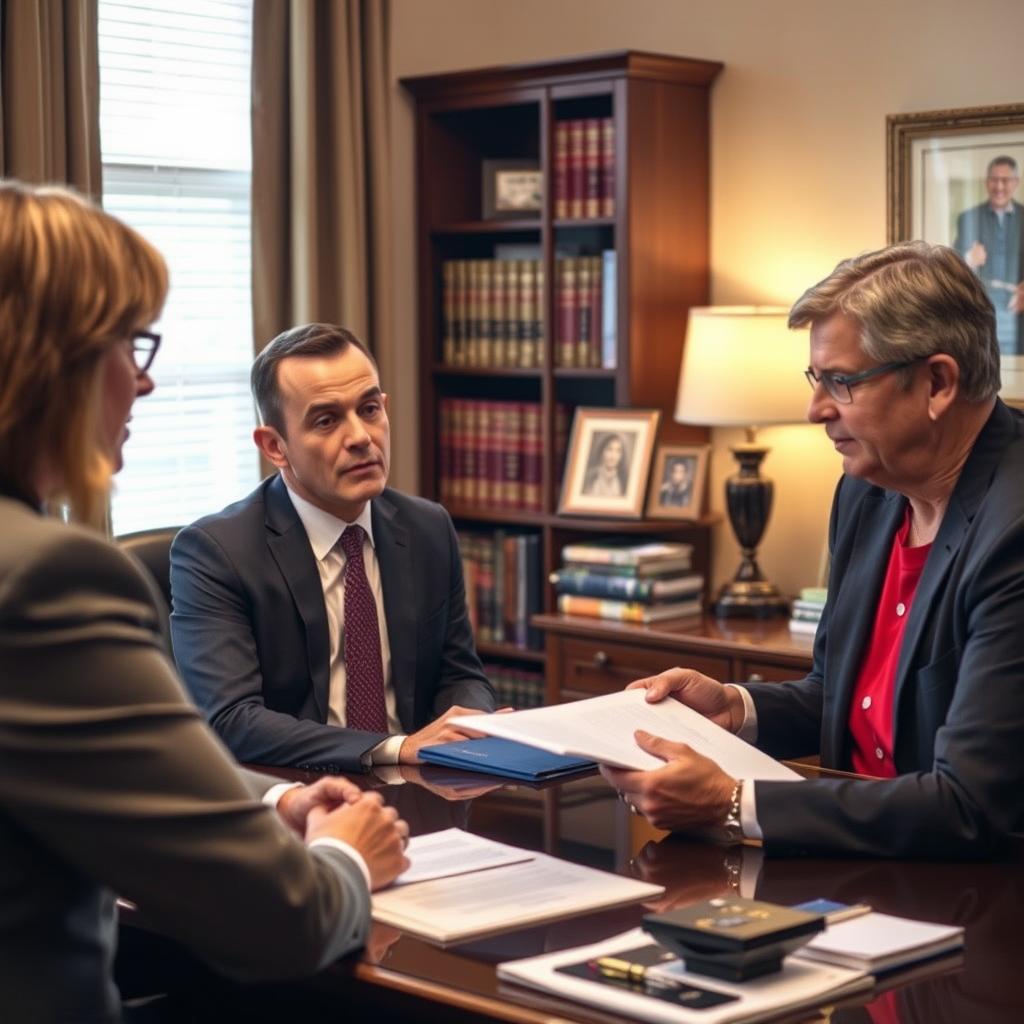
Postnuptial Agreement Lawyer King William County, VA
For married couples in King William County, a postnuptial agreement can bring clarity to financial expectations, property division, and spousal responsibilities during the marriage—or if it ends. These contracts, executed after the wedding, define how assets, debts, and support issues will be handled. Unlike a prenuptial agreement, a postnuptial agreement is entered into after the marriage has begun, and Virginia law treats both equally under the Virginia Premarital Agreement Act. Law Offices Of SRIS, P.C., founded in 1997, represents clients in the preparation, negotiation, and enforcement of postnuptial agreements throughout King William County and the surrounding Ninth Judicial District. Mr. Sris, Owner and Founder, and the firm’s Of Counsel attorneys bring a practical, straightforward approach to family law matters. Our Richmond Location serves individuals in King William, West Point, Aylett, and communities along Route 30 and Route 360. To request a consultation about a postnuptial agreement, contact our firm at (888) 437-7747. Law Offices Of SRIS, P.C. – Advocacy Without Borders.
What Postnuptial Agreement Means in King William County
A postnuptial agreement in King William County is a written contract between spouses that settles financial and property matters, and may address spousal support, separate property, and the division of marital assets. Under Virginia law, these agreements are governed by Va. Code § 20-147 et seq., the Virginia Premarital Agreement Act, which applies to both prenuptial and postnuptial instruments. For a postnuptial agreement to be enforceable, it must be in writing, signed by both parties, and entered into voluntarily with full disclosure of assets and liabilities. A court may refuse to enforce an agreement that is unconscionable or the product of duress.
King William County family law matters are heard in the King William County Circuit Court, located at 351 Courthouse Lane, Suite 201, King William, VA 23086. The Circuit Court has exclusive jurisdiction over divorce and equitable distribution, and it reviews postnuptial agreements as part of the overall financial settlement if a marriage dissolves. The nearby King William County Juvenile and Domestic Relations District Court handles custody, visitation, and support matters, but the circuit court remains the proper venue for enforcement or interpretation of a postnuptial agreement’s property provisions. Because the county is rural, with a smaller legal community, familiarity with local court procedures and the Ninth Judicial District’s expectations is important. The firm’s Richmond Location represents clients in these courts, and our attorneys are familiar with the practical aspects of presenting postnuptial agreement evidence before a circuit court judge in this locality.
How Mr. Sris and the Firm’s Of Counsel Attorneys Handle Postnuptial Agreement Cases
When a client in King William County contacts our firm regarding a postnuptial agreement, the process begins with a confidential consultation to understand the client’s goals, the marriage’s financial picture, and any existing estate plans or business interests. Mr. Sris and the firm’s Of Counsel attorneys work to draft an agreement that reflects both spouses’ intentions while complying with Virginia’s statutory requirements. The drafting process includes a thorough review of assets classified as marital, separate, or hybrid under Virginia’s equitable distribution framework, and the agreement may address the treatment of retirement accounts, real estate, closely held business interests, and inheritances.
If both spouses are represented by independent counsel—as recommended—the agreement is negotiated in good faith until a final, signed instrument is achieved. Should a dispute arise later over the validity or interpretation of the postnuptial agreement, Mr. Sris and the firm’s Of Counsel attorneys represent clients in enforcement or challenge proceedings before the King William County Circuit Court. The focus remains on resolving the matter efficiently while protecting the client’s interests under the agreement. Every case is different, and outcomes depend on the specific facts and the court’s assessment of the agreement’s fairness and voluntariness.
About Mr. Sris and the Firm’s Of Counsel Attorneys
Mr. Sris, Owner and Founder of Law Offices Of SRIS, P.C., is a former prosecutor who established the firm in 1997. He is admitted to practice in Virginia, Maryland, the District of Columbia, New Jersey, and New York. Mr. Sris testified before the Virginia House Courts of Justice Committee in support of 2019 HB 635 (chief patron Del. David Bulova). The firm’s Of Counsel attorneys bring extensive additional experience in family law, civil litigation, and related practice areas. Together, Mr. Sris and the firm’s Of Counsel attorneys have handled a wide range of family law matters across Virginia, including the drafting and litigation of postnuptial agreements. Results may vary.
The firm’s Richmond Location provides convenient access for King William County residents. To discuss a postnuptial agreement or any family law matter, call (888) 437-7747 to schedule a consultation.
Frequently Asked Questions
What is a postnuptial agreement under Virginia law?
A postnuptial agreement in Virginia is a written contract between spouses, executed after marriage, that governs property division, spousal support, and other financial matters in the event of separation or divorce. Under the Virginia Premarital Agreement Act, these agreements must be in writing, signed by both parties, and entered into voluntarily. Full and fair disclosure of assets and liabilities is generally required to avoid later claims of unconscionability. The King William County Circuit Court reviews postnuptial agreements within divorce or separate maintenance proceedings to determine whether they are enforceable and equitable.
When should a couple in King William County consider a postnuptial agreement?
A postnuptial agreement may be appropriate when a couple experiences a significant change in circumstances after the wedding, such as receiving an inheritance, starting or selling a business, or when one spouse decides to leave the workforce. Couples in King William County may also use a postnuptial agreement to clarify financial roles, protect separate property, or resolve disagreements about money before they escalate. Because Virginia is an equitable distribution state, a well-drafted postnuptial agreement can provide certainty that statutory property division would not. The firm offers consultations to help couples evaluate whether an agreement fits their situation.
How does a postnuptial agreement differ from a prenuptial agreement?
A prenuptial agreement is signed before marriage, while a postnuptial agreement is executed after the wedding; otherwise, Virginia law treats both instruments very similarly under the Premarital Agreement Act. Both must meet the same enforceability standards—voluntary execution, full disclosure, and written form. The practical difference is timing and, often, the emotional context: postnuptial agreements are negotiated during an ongoing marriage, which can introduce unique considerations regarding bargaining power and disclosure. Our firm assists clients at either stage.
Can a postnuptial agreement be challenged in King William County?
Yes, a postnuptial agreement can be challenged in the King William County Circuit Court on grounds such as fraud, duress, lack of voluntary consent, unconscionability, or failure to disclose assets. A party seeking to set aside the agreement bears the burden of proving the defect. Courts in the Ninth Judicial District apply the same legal standards as elsewhere in Virginia. If a challenge is raised, presenting clear evidence of the negotiation process and financial disclosures is critical. The firm represents clients both seeking to enforce and contest postnuptial agreements in local courts.
Do I need a lawyer to draft a postnuptial agreement in Virginia?
Virginia law does not require each spouse to have a separate lawyer, but independent legal representation is strongly recommended to help ensure the agreement is entered into knowingly and voluntarily. A lawyer can evaluate whether the agreement’s terms are fair under the circumstances and whether adequate disclosure has been made. If one spouse proceeds without counsel, the agreement is more vulnerable to later challenge. Our firm can draft the agreement, represent one party, or—with informed consent—serve as scrivener with both parties acknowledging the conflict.
What happens to our property if we divorce without a postnuptial agreement?
Without a postnuptial agreement, Virginia’s equitable distribution statute controls, meaning the King William County Circuit Court will classify and divide marital property based on eleven statutory factors—not necessarily equally. The outcome is less predictable, and the process may involve more extensive discovery and litigation. A postnuptial agreement allows a couple to define their own property arrangement and can simplify and expedite the divorce process. For those with business interests, professional practices, or significant separate property, the absence of an agreement often leads to more costly disputes.
Additional Resources
• Family Law Lawyer Fairfax County, VA
• Family Law Lawyer Fairfax, VA
• Family Law Lawyer Prince William County, VA
• Family Law Lawyer Manassas, VA
Official Virginia Resources
• Virginia Code Title 20 – Domestic Relations
• King William County Combined Courts
Attorney advertising. Prior results do not guarantee a similar outcome. Results may vary.
Case results depend on a variety of factors unique to each case.