
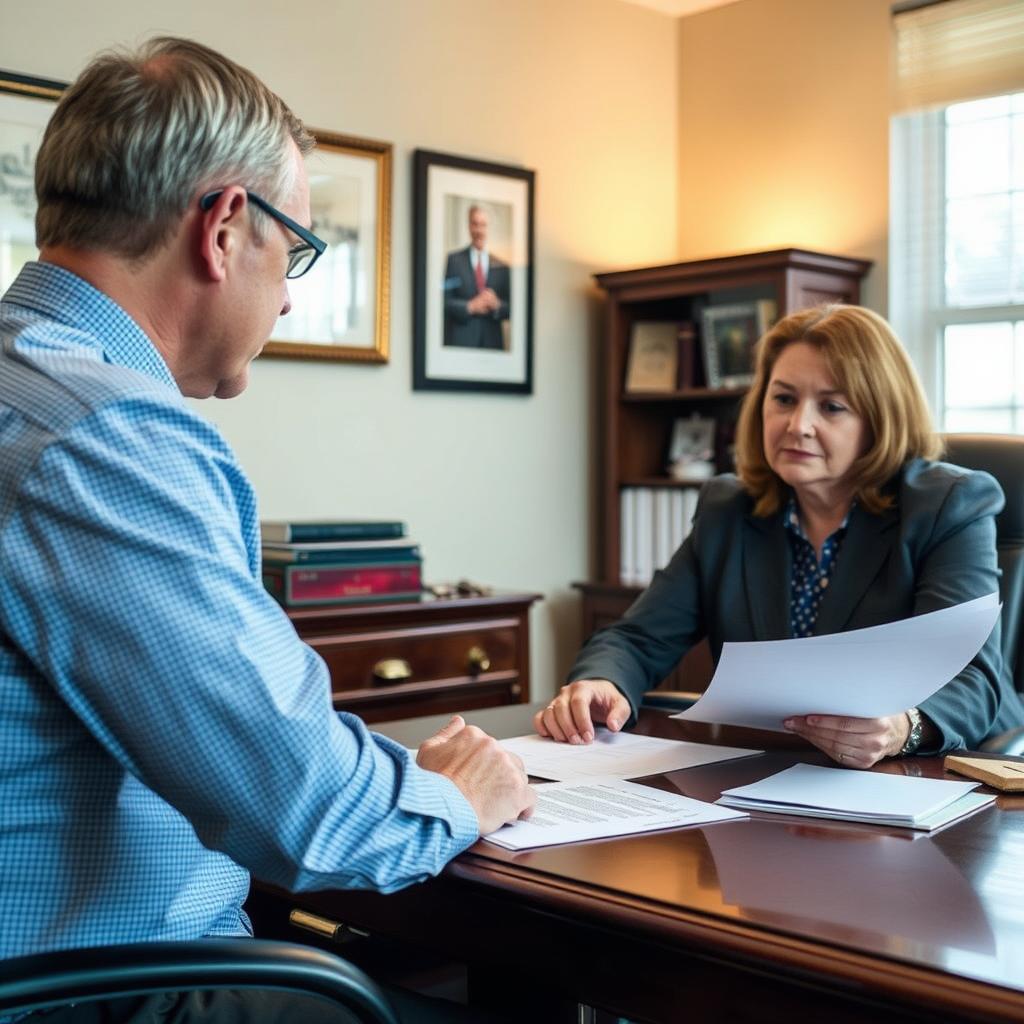
Property Settlement Lawyer Rappahannock County, VA
When a marriage ends in Virginia, dividing the assets and debts the couple accumulated together—a process called property settlement—can be one of the most stressful parts of a divorce. The outcome directly affects each spouse’s financial future. In Rappahannock County, property settlement follows the same legal framework that governs the rest of the state, but the local court procedures and the community’s character can shape how a case unfolds. Law Offices Of SRIS, P.C., founded in 1997, represents clients in property settlement and equitable distribution matters throughout Rappahannock County, from Washington and Sperryville to Flint Hill. Mr. Sris, Owner and Founder, and the firm’s Of Counsel attorneys bring extensive combined legal experience to each representation. For a consultation about your property settlement concerns, reach the firm at (888) 437-7747. Law Offices Of SRIS, P.C. – Advocacy Without Borders.
What Property Settlement Means in Rappahannock County
Virginia follows the principle of equitable distribution, not community property. That means a court does not simply split everything 50/50; it divides marital property in a way that is fair—equitable—after considering a list of statutory factors. Va. Code § 20-107.3 governs the process and requires the judge to classify all property as marital, separate, or hybrid, then value it and distribute it fairly.
In Rappahannock County, these cases are heard by the Rappahannock County Circuit Court, located at 250 Gay Street, Suite 1, Washington, Virginia. The judges of the Twentieth Judicial District handle family law matters with an understanding of the rural character of the county, where assets often include farms, small businesses, and family land that have been held for generations. Marital property includes everything acquired during the marriage by either spouse, other than gifts or inheritances from third parties. Separate property—what each spouse owned before the marriage or received as a gift or inheritance—is not divided, but any increase in its value may be subject to division if marital effort contributed to the increase. The court considers factors such as the length of the marriage, the contributions of each spouse to the family’s well‑being, the age and health of the parties, and the tax consequences of the division. A property settlement agreement signed by both spouses and approved by the court can resolve all division issues without trial.
Virginia courts divide marital property under equitable distribution, considering 11 statutory factors listed in Va. Code § 20‑107.3, including the duration of the marriage, the contributions of each spouse, and the circumstances that led to the dissolution.
Source: Va. Code § 20‑107.3. Virginia Code Section 20‑107.3
Reviewed by Mr. Sris, admitted in VA, MD, DC, NJ, NY.
How Mr. Sris and His Of Counsel Handle Property Settlement Cases
Every property settlement starts with a clear picture of the marital estate. Mr. Sris and the firm’s Of Counsel attorneys work with clients to identify all assets and debts, determine their classification, and evaluate their value. When possible, the parties negotiate a separation agreement that resolves the division out of court. The agreement is drafted and reviewed to ensure it accurately reflects the couple’s understanding and complies with Virginia law. If negotiation is not productive, the matter proceeds to litigation in Rappahannock County Circuit Court. The firm handles evidentiary hearings, engages forensic accountants or business valuation professionals when needed, and advocates for a division that reflects the client’s contributions and needs.
Because Rappahannock County is a rural jurisdiction with a small-town court culture, Mr. Sris and the firm’s Of Counsel attorneys understand how local practice affects scheduling and procedure. They coordinate with local counsel, prepare clients for hearings and depositions, and work to keep the process as efficient as possible. For cases involving complex assets—multiple real estate parcels, retirement accounts, professional practices, or inheritance claims—the firm draws on its combined experience to address valuation disputes and trace separate property. Throughout, the focus remains on achieving a settlement that protects the client’s long‑term financial interests. Results may vary.
About Mr. Sris and His Of Counsel Team
Mr. Sris, Owner and Founder of Law Offices Of SRIS, P.C., has practiced family law since founding the firm in 1997. His legal experience extends beyond the courtroom: he testified before the Virginia House Courts of Justice Committee in support of 2019 HB 635 (chief patron Del. David Bulova), a measure that refined the equitable distribution statute. Mr. Sris is a former prosecutor, and he brings the analytical skills developed in that role to every family law matter. He is admitted in Virginia, Maryland, the District of Columbia, New Jersey, and New York. Alongside Mr. Sris, the firm’s Of Counsel attorneys contribute substantial experience in divorce, equitable distribution, and related litigation. Together, Mr. Sris and the firm’s Of Counsel attorneys serve clients in Rappahannock County from the firm’s Fairfax location. Their combined legal experience is applied to each case, and the firm works to achieve favorable outcomes for every client.
Frequently Asked Questions
What is equitable distribution in Virginia?
Equitable distribution is the legal process a Virginia court uses to divide marital property in a divorce—fairly, but not necessarily equally—based on 11 statutory factors. The court first classifies all property as marital, separate, or hybrid, then assigns a value and makes a division it considers just. This process can be resolved by a written separation agreement signed by both spouses and accepted by the court, or by a judge’s decree after a trial. The aim is to achieve a fair outcome that reflects each spouse’s contribution and future needs. To discuss how equitable distribution applies to your situation, reach Law Offices Of SRIS, P.C. at (888) 437-7747.
How is property divided in a divorce in Rappahannock County?
Property in a Rappahannock County divorce is divided under Virginia’s equitable distribution framework, with the Rappahannock County Circuit Court handling all division matters. The judge applies Va. Code § 20‑107.3, considering factors like the length of the marriage, each spouse’s contributions, and the tax consequences. If the couple has signed a separation agreement, the court will generally incorporate it into the final decree. When no agreement exists, the court schedules a hearing, hears evidence, and orders a division. The firm appears regularly before this court and can explain how local procedure may affect the timeline. For a consultation, reach Mr. Sris and his Of Counsel at (888) 437-7747.
Do I need a lawyer for property settlement in a Virginia divorce?
You are not legally required to have a lawyer to settle property division in Virginia, but the process involves complicated classification and valuation rules that can permanently affect your financial future. A lawyer can help you identify all marital assets, trace separate property, evaluate hidden debts, and negotiate a settlement that protects your interests. Attempting to handle these issues without experienced guidance can lead to an agreement that overlooks important assets or fails to account for tax consequences. Mr. Sris and the firm’s Of Counsel attorneys regularly assist clients in Rappahannock County with property settlement matters. Contact Law Offices Of SRIS, P.C. at (888) 437-7747 to discuss your case.
What is the difference between marital property and separate property in Virginia?
Marital property is property acquired by either spouse during the marriage that is not a gift or inheritance from a third party; separate property is what each spouse owned before marriage or received as a gift or inheritance during marriage. The distinction is critical because only marital property is divided by the court. However, the increase in value of separate property may be subject to division if marital efforts caused the increase. Classification disputes often arise over commingled bank accounts, real estate improvements, or business growth. An attorney can help you gather evidence to support your classification position. To discuss the details of your matter, reach Law Offices Of SRIS, P.C. at (888) 437-7747.
Can a separation agreement settle property division without going to court in Rappahannock County?
Yes, a property settlement agreement signed by both spouses can fully resolve property division without a contested hearing, and the Rappahannock County Circuit Court will generally approve the agreement and incorporate it into the divorce decree. The agreement must be in writing and cover all marital assets and debts. Each spouse should have independent legal counsel review the document before signing. If the agreement is fair and voluntary, the court accepts it as the basis for the property division. This approach saves time and reduces conflict. For guidance on negotiating a separation agreement, contact Law Offices Of SRIS, P.C. at (888) 437-7747.
Related Family Law Pages:
Family Law Lawyer Fairfax County, VA |
Family Law Lawyer Prince William County, VA |
Family Law Lawyer Manassas (City), VA |
Family Law Lawyer Falls Church (City), VA
Virginia Primary Sources:
Va. Code § 20-107.3 — Equitable Distribution |
Rappahannock County Circuit Court |
Virginia Judicial System
Attorney advertising. Prior results do not guarantee a similar outcome.
Results may vary.
Case results depend on a variety of factors unique to each case.